Citizen Service Improvement Tools: Top Picks for 2026
Last Updated: March 21, 2026
TL;DR
- Citizen service improvement tools combine operational platforms like 311 systems with analytics for strategic decision-making
- 51% increase in civic participation occurs when governments implement digital solutions for service requests
- Modern tools must support AI, real-time tracking, mobile access, and data-driven insights for effectiveness
- Budget constraints and legacy system integration remain the top challenges for government adoption
- 2026 success requires moving beyond transactional tools to comprehensive analytics that optimize resource allocation
What Are Citizen Service Improvement Tools?
Citizen service improvement tools are digital infrastructure solutions that connect governments directly to the people they serve. At their core, these platforms enable citizens to submit requests, report issues, track progress in real time, and provide feedback on their experience, while governments gain visibility into service delivery performance and citizen sentiment.
The category spans a broad ecosystem. Traditional 311 systems handle non-emergency requests like pothole reporting and noise complaints. Modern citizen portals consolidate permit applications, license renewals, and payment processing into single digital touchpoints. CRM platforms manage interactions across channels, ensuring no request falls through cracks. Then there's the analytical layer: dashboards that aggregate data on response times, service backlogs, and citizen satisfaction metrics, turning operational chaos into strategic intelligence.
Why do governments need these tools? The answer sits in a fundamental trust deficit. Only 40% of citizens have trust and confidence in government institutions, and poor service delivery compounds that skepticism. When citizens can't easily report a problem or track its resolution, frustration builds. When government leaders lack visibility into bottlenecks and performance trends, they can't allocate resources effectively.
Digital services are 74% faster than in-person service delivery, which matters enormously for agencies operating with lean budgets. These tools also create accountability. Transparency builds confidence. When citizens see their request acknowledged, tracked, and resolved, institutional trust strengthens.

The best tools balance both worlds: making citizen interactions frictionless while giving leadership the data needed to drive continuous improvement.
Core Features of Effective Citizen Service Tools
Effective citizen service tools operate on a foundation of core features that directly impact how governments respond to resident needs. The most critical capability is comprehensive 311 request management, which consolidates non-emergency reports across multiple channels. Whether citizens contact you through a web portal, mobile app, SMS, phone, or social media, requests funnel into a single system. This consolidation matters because it eliminates duplicates and prevents wasted trips or repeated efforts that frustrate both residents and staff.
Real-time tracking transforms the citizen experience from frustration to confidence. When residents can see exactly where their pothole repair or permit application stands, it reduces follow-up calls and builds trust in government responsiveness. Status updates should be automatic and immediate, not a manual afterthought.
The analytical layer separates adequate tools from strategic assets. Modern platforms capture data on which issues recur most frequently, which neighborhoods experience the longest response times, and which service categories consistently miss deadlines. Analytics from code enforcement and issue tracking software identify recurring issues and prevent repeat problems, enabling you to allocate resources where they'll have the highest impact.
Service-level agreements paired with automated alerts keep your teams accountable. When a request approaches its deadline, the system notifies the responsible department, preventing embarrassing overages. Integration with existing government systems and legacy platforms ensures adoption doesn't require wholesale technology replacement; instead, new tools connect seamlessly to what you already operate.
Finally, transparency features that show request progress publicly signal government competence. When citizens and elected officials can access dashboards showing response metrics, you create healthy accountability. Research shows civic participation increased to 51% upon implementation of digital solutions, demonstrating that accessible, responsive systems drive engagement. These features work together to create systems that don't just process requests faster; they fundamentally shift how citizens perceive government effectiveness.
Top Platforms and Tools in 2026
The citizen service improvement platform market in 2026 reflects a clear split between specialized point solutions and comprehensive enterprise systems, each addressing different government priorities and budgets.
Catalis RME focuses narrowly on public works efficiency, making it the go-to choice for departments managing pothole reports, street maintenance requests, and infrastructure inspections. CentralSquare takes a broader approach, positioning itself as mission-critical software that handles permitting, licensing, and citizen engagement across multiple departments. For governments prioritizing constituent relationship management, Granicus emphasizes digital service transformation with tools designed to centralize citizen interactions across multiple channels.
Accela and Civicplus represent different philosophies. Accela's cloud-based platform excels at permits and inspections with deep integration capabilities, appealing to larger municipalities managing complex regulatory workflows. Civicplus, paired with its SeeClickFix acquisition, offers 311 CRM functionality with multi-channel request management; it's particularly strong for governments wanting a unified platform without extensive customization.
GOGov specializes in citizen request centralization and intelligent routing, solving a specific pain point: directing complaints and service requests to the right department automatically. This routing intelligence matters more than it sounds; service request software transforms citizen reports into actionable field assignments, significantly reducing administrative friction.
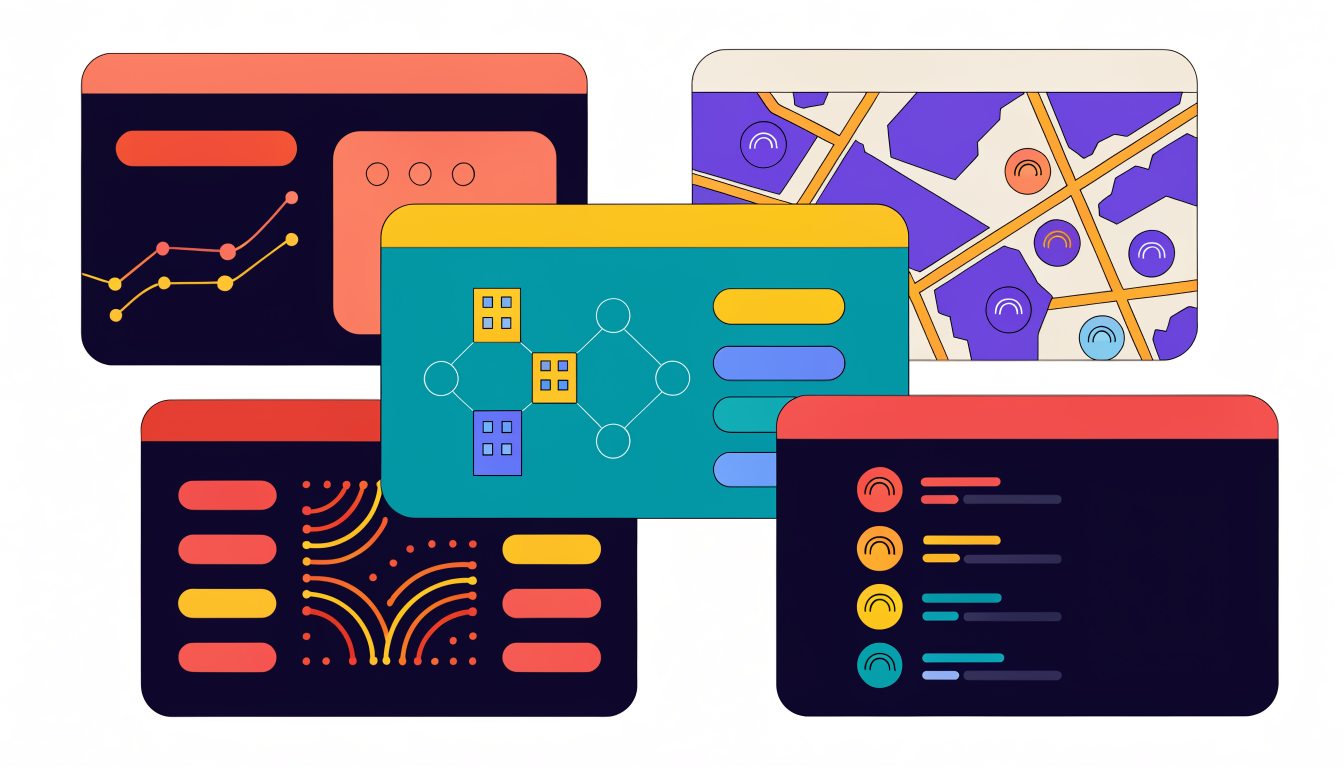
Key differentiators across platforms include deployment options (cloud versus on-premise), native AI capabilities, integration depth with existing systems, and pricing transparency. Verint brings low-code customization to the mix, reducing dependency on professional services. Before selecting any platform, evaluate whether your priority is operational efficiency through specialized tools or strategic intelligence through integrated analytics. Most successful implementations use both.
The Strategic Intelligence Layer: Why Analytics Matter
Most government agencies still operate with a critical gap: they manage citizen requests effectively but rarely ask why those requests are happening in the first place. Transactional tools handle the mechanics of service delivery, but they leave strategic questions unanswered. What patterns drive demand? Where will problems emerge next? Which investments yield the highest citizen impact?
This is where analytics transforms good service operations into strategic assets. The shift from request management to data-driven decision-making represents a fundamental evolution in how governments understand and serve their communities.
Analytics reveal hidden patterns in citizen interactions. A spike in pothole reports in one neighborhood might indicate broader infrastructure deterioration; a surge in permit applications could signal economic development opportunities. These insights enable proactive interventions before problems escalate into crises or missed opportunities. Rather than reacting to citizen needs, agencies can anticipate them.
Predictive intelligence takes this further. By analyzing historical service data, governments can forecast demand, optimize resource allocation, and schedule maintenance before failures occur. Real-time dashboards enable rapid response when issues do arise, while geospatial analysis identifies geographic hotspots that need targeted attention. Nearly half of government employees rate geospatial data as critical to their operations, yet many lack the tools to leverage it effectively.
Data integration across departments eliminates silos that have long plagued government operations. When parks, public works, and planning departments share insights, coordination improves and redundant efforts disappear. This collaborative intelligence becomes essential as agencies prepare for AI service hubs in 2026. Agencies succeeding with AI will rethink how citizens interact with government and build AI service hubs, but success requires infrastructure readiness and API integration that analytics platforms enable.
Given tight budgets, ROI matters enormously. Analytics justify investments by demonstrating efficiency gains and improved outcomes. Most states have not yet integrated portals into strategic decision-making, meaning significant opportunity exists for early adopters. The agencies moving fastest aren't just collecting data; they're converting it into competitive advantage.
Implementation Challenges and How to Overcome Them
Budget constraints remain the elephant in the room. 93% of government officials named funding as the top challenge for citizen services portals, and rightfully so. Modern service tools demand investment across software licenses, infrastructure upgrades, and skilled personnel. The good news? Strategic phasing works better than waiting for perfect funding. Start with high-impact, high-volume services that generate quick wins and justify continued investment. This approach builds momentum and political support for subsequent phases.
Legacy system integration compounds budget challenges by adding technical complexity and hidden costs. Your existing systems likely weren't designed to communicate seamlessly with modern platforms. Rather than rip-and-replace approaches that drain resources, plan for staged integration using APIs and middleware. This reduces disruption while protecting your existing investments.

Data silos represent another critical obstacle. When citizen information lives in disconnected systems, you can't deliver coordinated service experiences or leverage analytics effectively. Standardizing on common platforms reduces silos and simplifies security. This doesn't mean replacing everything overnight; it means establishing standards for new implementations and gradually consolidating where feasible.
Change management often gets overlooked but determines success. Staff need training on new tools, and citizens need awareness campaigns explaining digital options. Without this investment, adoption stalls regardless of how sophisticated your technology is. Plan for training well before launch, involve frontline workers early, and communicate benefits clearly to the public. Real transformation happens when people embrace the tools, not when they're forced to use them.
Key Takeaways for Government Leaders
The citizen service tools you choose today will determine your government's credibility tomorrow. This isn't hyperbole. Citizens now expect the same responsiveness from government agencies they get from private sector services, and tools that only handle transactions without providing insight leave you reactive rather than proactive.
When evaluating platforms, prioritize those that combine operational efficiency with strategic analytics. A system that processes applications faster but generates no insights into bottlenecks or citizen needs is only half the solution. The most successful AI initiatives start with a clear business objective, map that objective to a specific use case and then design the infrastructure required. This means defining what you actually want to improve before selecting technology.
Three critical prerequisites should appear on your evaluation checklist: data integration capabilities, API readiness, and geospatial analytics functionality. Without these, you're locked out of AI adoption and predictive service delivery. Budget decisions should measure ROI through efficiency gains, reduced response times, and measurable citizen satisfaction improvements, not just cost savings.
Implementation strategy matters more than moving fast. Proven models matter more than being first to adopt in public sector. A phased rollout based on demonstrated success reduces risk significantly compared to pilot-only approaches that never scale.
Finally, break down departmental silos. Analytics that remain isolated in one division can't inform resource allocation across your entire operation. The governments winning in 2026 are those treating analytics as essential infrastructure, not optional add-ons. Your citizens deserve nothing less.
Moving Forward: Building Your Citizen Service Strategy for 2026
The most effective government leaders in 2026 will be those who recognize a simple truth: citizen service excellence requires both operational precision and strategic insight. Your frontline teams need tools that work smoothly, but your leadership needs the data intelligence to see patterns, anticipate demand, and allocate resources where they matter most.
This integrated approach separates governments that merely respond to citizen needs from those that anticipate and exceed them. When you combine operational platforms with real-time analytics, something shifts. A spike in permit applications becomes a signal to open additional processing capacity. A cluster of service complaints reveals systemic gaps before they cascade into larger problems. Citizen interactions transform from isolated transactions into strategic intelligence that informs better decisions.
The barrier to this integration isn't technology; it's data silos. Most government agencies operate with tools that don't talk to each other. Finance systems don't communicate with service delivery platforms. Citizen feedback stays trapped in departmental databases. This fragmentation costs you twice: operational inefficiency and lost strategic insight.
Building your 2026 strategy means assessing where you stand today. Do your current tools provide visibility across your entire service ecosystem? Can your leadership team access unified dashboards that show both operational health and citizen outcome trends? Are your teams making decisions based on complete data or incomplete pictures?
The governments pulling ahead are those choosing platforms that unify data across their entire infrastructure. This unified foundation enables real-time operational adjustments and strategic intelligence in the same system. Your teams work faster, your leaders decide smarter, and citizens experience noticeably better service.
Start by mapping your current data landscape. Identify where critical information gets lost between systems. Then partner with a platform designed to bridge those gaps, combining the operational tools your teams depend on with the strategic analytics your leadership needs to drive meaningful outcomes. That foundation will define your competitive advantage in citizen service delivery for years to come.
Frequently Asked Questions
Q: What's the difference between a 311 system and a citizen portal?
A 311 system handles inbound requests, complaints, and service inquiries through a single channel, then routes them to the right department. A citizen portal is broader: it lets residents access services, pay bills, track requests, and find information all in one place. You need both. The 311 handles intake; the portal handles the broader citizen experience.
Q: How long does it take to implement a citizen service platform?
Most deployments take 4 to 9 months from contract to go-live, depending on scope and legacy system integration. Quick wins (basic portals, simple request tracking) land in 3 to 4 months. Full-scale implementations with analytics, custom workflows, and deep integrations take longer. Budget 2 to 3 months just for planning and vendor selection.
Q: What ROI should we expect?
Expect 15 to 25 percent reduction in phone call volume within the first year. Processing costs drop because staff handle more requests digitally. Satisfaction scores typically rise 10 to 20 points. Tangible savings come from reduced manual data entry, faster resolution times, and lower operational overhead.
Q: Can new platforms integrate with legacy systems?
Yes, but it requires upfront technical assessment. Most modern tools use APIs to connect with older systems. Budget extra time and resources for custom integration work. Open platforms designed for flexibility integrate more smoothly than closed solutions.
Q: How important is analytics?
Critical. Without data visibility, you're managing blind. Analytics reveal bottlenecks, show which services citizens actually need, and prove where improvements matter most. They transform citizen service from reactive to strategic.
Q: How do we drive digital adoption?
Make digital the easiest option. Simplify onboarding, promote heavily, and keep non-digital channels open initially. Early adopters create momentum. Train staff to recommend digital options during phone calls. Results compound within 6 to 12 months.
Keep reading

Critical Third Parties: UK Cloud Rule Explained
A Critical Third Party is a provider whose service failure could threaten UK financial stability. The first UK designations are four cloud providers.

Netflix Earnings Put Always-On TV in Focus
Netflix reports Q2 results July 16 after reports it is weighing always-on channels. Arkolith maps NFLX to $284.0B in tracked 13F value.

UK Cloud Watchlist Maps to $4.45T in 13F Value
The UK's first cloud oversight list maps to Microsoft, Alphabet, Amazon and Oracle, which Arkolith tracks across $4.45T of Q1 2026 13F value.