Compliance Data Management: Essential Tips for 2026

Last Updated: March 19, 2026
Key Takeaways
- Compliance data management ensures data handling aligns with regulations like GDPR, HIPAA, and CCPA while protecting sensitive information
- Key components include data inventory, classification, access controls, security measures, and continuous monitoring and audits
- Strong compliance practices reduce breach risk, avoid penalties, build customer trust, and improve operational efficiency
- 2026 requires automated monitoring, real-time insights, data lineage visibility, and AI-driven risk assessment tools
What Is Compliance Data Management?
Compliance data management is fundamentally about ensuring your organization handles data in ways that satisfy legal requirements, regulatory standards, and ethical obligations. It's the system of processes, policies, and controls that govern how data flows through your business, from initial collection through final disposal. Think of it as the backbone that keeps your data operations aligned with rules like GDPR, CCPA, HIPAA, and industry-specific regulations.
Here's what makes this critical right now: according to data governance experts at Atlan, data compliance management involves implementing policies, procedures, and controls to meet requirements of various data privacy laws and regulations. And the stakes are rising. Recent research shows a 2023 study found data breaches at all-time high with nearly 20% increase in violations in first nine months of 2023 compared to all of 2022.

But compliance data management goes far beyond checking boxes or avoiding fines. It encompasses governance, privacy protection, and accountability across your entire data lifecycle. When done right, it builds stakeholder trust, reduces operational risk, and positions your organization to shift from reactive firefighting to proactive intelligence. That's the difference between compliance as burden and compliance as competitive advantage.
Key Regulations You Need to Know in 2026
The regulatory landscape in 2026 is fragmented but interconnected. Your compliance obligations depend entirely on where your organization operates, what data you handle, and which industries you serve.
Start with the big three that affect most businesses. GDPR remains the gold standard for data privacy, governing how organizations collect, process, and store personal data of EU residents; non-compliance carries fines up to 4% of global revenue. HIPAA applies if you touch healthcare data in the US, requiring strict safeguards around patient information. CCPA and its successors (like California's CPRA) set privacy expectations for any company serving California residents, regardless of location. According to Palo Alto Networks, these frameworks address privacy rights, data handling standards, and security requirements across different sectors.
Payment card data falls under PCI-DSS, a non-negotiable requirement if you process credit cards. Even small merchants can't skip this one.
Beyond these heavyweights, operational frameworks matter more each year. ISO 27001, NIST 800-53, SOC 2, and CSA STAR provide the technical and procedural scaffolding that auditors expect. They're not legally mandated everywhere, but they're becoming table stakes for enterprise contracts.
The EU Data Governance Act represents the next wave of thinking. Rather than just protecting data, it's reshaping how organizations can share data securely across sectors and borders, fundamentally changing data strategy. Expect more regulations like this: frameworks that move beyond restriction toward responsible data use.
Here's the practical truth: regulations evolve faster than most compliance teams can track. You need systems that flag regulatory changes automatically, map them to your operations, and alert you before deadlines arrive. Reactive compliance means penalties and operational chaos. Proactive data intelligence means staying ahead.
Core Components of a Compliance Data Management Strategy
Building a strong compliance data management strategy requires you to address six interconnected components, each serving as a foundation for the next. Let's break down what you need to do right now.
Start with a complete data inventory. Catalog every data asset your organization holds, regardless of where it lives. Spreadsheets, databases, cloud storage, legacy systems, everything. You can't protect what you don't know exists. This inventory becomes your single source of truth for what data you're managing and where compliance obligations apply.
Next comes classification. Not all data carries equal risk. Categorize your assets by sensitivity level and regulatory impact. Personal identifiable information (PII) requires different handling than anonymized operational metrics. This step prevents you from over-protecting low-risk data while under-protecting critical assets.

Access controls are your enforcement mechanism. Implement role-based access controls (RBAC) paired with multi-factor authentication (MFA) to ensure only authorized personnel access sensitive data. This prevents both external breaches and internal misuse.
Security measures then protect data in transit and at rest. Encryption, data anonymization, and continuous monitoring create multiple defensive layers. For regulations like GDPR and HIPAA, the ability to instantly identify where personal data originates, gets used, and is stored is essential to maintaining compliance and demonstrating accountability.
Finally, establish real-time monitoring and regular audits. Continuous verification catches compliance drift before it becomes a problem. Track data lineage so you understand the complete journey of your information from source through transformation to destination.
These six components work as an integrated system. Implement them methodically, and you'll shift from reactive scrambling to genuine data intelligence.
Challenges Organizations Face in Compliance Data Management
Let's be honest: compliance data management feels like herding cats while someone keeps adding more cats. You're juggling evolving regulations that shift faster than your team can document them, managing exponential data volumes from disconnected sources, and doing it all with stretched resources and legacy systems that weren't built for modern compliance demands.
The regulatory environment alone creates constant pressure. What worked last quarter may not cut it today as frameworks like GDPR, HIPAA, and industry-specific standards continue evolving. Staying compliant requires continuous monitoring and adaptation, yet many organizations still rely on manual processes that can't keep pace.
Data complexity compounds the challenge. Your compliance data lives everywhere: databases, cloud platforms, SaaS applications, on-premises servers. Pulling it together for audits or investigations becomes a nightmare of integration work, and the longer data stays siloed, the higher your risk of missing critical compliance issues.
Resource constraints make everything harder. Most teams lack the specialized expertise needed for modern compliance data management, and hiring skilled talent is expensive. Meanwhile, vendor ecosystems add another layer of risk; 98% of organizations had a vendor that experienced a data breach in the last two years, putting your compliance posture at the mercy of third parties.
Perhaps most critical: maintaining real-time visibility across distributed infrastructure feels impossible without the right tools. Blind spots emerge quickly, and by the time you discover a compliance gap, it's often too late.
The good news? These obstacles are solvable. Organizations moving from reactive to proactive compliance approaches are using intelligent data platforms to automate monitoring, integrate fragmented sources, and build the visibility needed to stay ahead of requirements rather than chasing them.
Best Practices for Implementing Compliance Data Management
Stop treating compliance as a checkbox exercise. The organizations winning in 2026 are those embedding compliance into their daily operations, not bolting it on afterward.
Start with a complete data discovery audit. You can't protect what you don't know exists. Map every data source across your infrastructure, identify shadow data lurking in forgotten spreadsheets, and document how information flows through your systems. Best practices include data discovery, comprehensive compliance policies, and regular reviews and updates.
Next, build a governance framework with clear ownership. Assign data stewards, define roles, and establish escalation paths. Without accountability, compliance efforts collapse under their own weight. Your framework should specify who classifies data, who approves access changes, and who investigates anomalies.
Classification comes next. Categorize data by sensitivity level and regulatory impact. Not everything requires the same protection. A customer email address demands different safeguards than anonymized aggregate usage metrics. Create policies that match controls to risk levels, preventing both over-engineering and dangerous gaps.
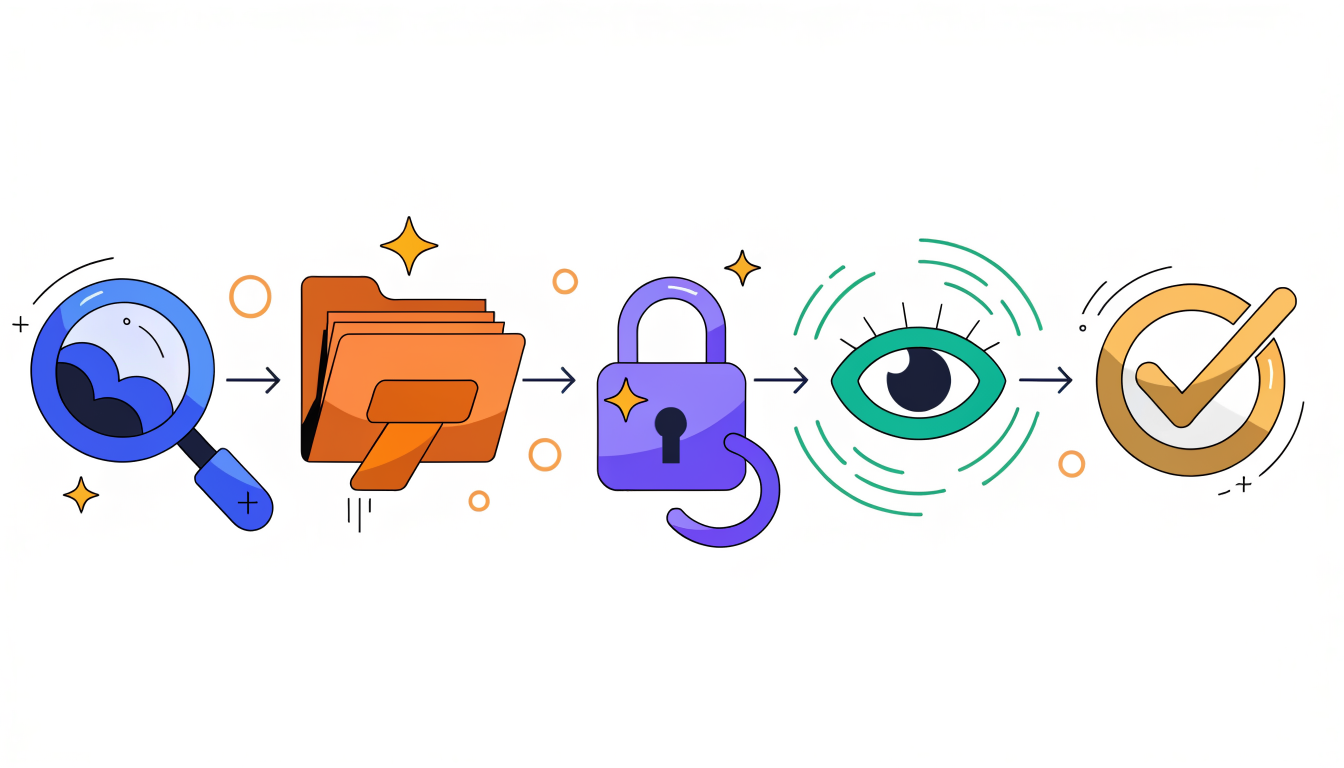
Automation separates reactive teams from proactive ones. Embed compliance checks into your development pipelines, deploy real-time monitoring with automated alerts, and use data lineage tools to track transformations. This catches violations before they become incidents.
Regular internal audits help identify gaps, ensure policies are being followed, and catch risks before they escalate. Schedule quarterly reviews and consider third-party assessments to validate your approach.
Finally, invest in your people. Compliance succeeds through culture, not systems alone. Train employees on policies, explain why compliance matters, and make reporting issues easy. Centralize everything in a GRC platform that eliminates silos between teams.
These steps transform compliance from a burden into operational intelligence that strengthens your entire data practice.
Why Compliance Data Management Matters for Your Business
Strong compliance data management isn't a checkbox exercise or a necessary evil. It's a strategic investment that directly impacts your bottom line and competitive position.
Consider the financial stakes. Regulatory fines and legal penalties can reach millions of dollars, with GDPR violations alone averaging hundreds of thousands per incident. One breach can obliterate years of profitability. But the upside is equally compelling: companies with certified compliance frameworks (ISO 27001, SOC 2) command customer trust and premium positioning in their markets.
Here's what effective compliance delivers beyond risk avoidance. Better data quality means better decisions. When you implement standardized data management processes, you're not just satisfying regulators; you're building organizational intelligence. Your teams access cleaner, more reliable information. Your analytics become sharper. Your strategic planning becomes faster.
Customer trust is tangible currency. Demonstrating genuine commitment to data protection differentiates you from competitors and justifies customer loyalty. Stakeholders and regulators see accountability, which opens doors to partnerships and expansion opportunities you'd otherwise miss.
The operational efficiency gains compound over time. Standardized processes reduce manual work, lower error rates, and free your team to focus on growth rather than firefighting compliance crises. And if you're eyeing cross-border expansion, proactive compliance isn't optional; it's your entry ticket to new markets.
This is why forward-thinking organizations treat compliance as a revenue enabler, not a cost center. The question isn't whether you can afford strong compliance data management. It's whether you can afford not to.
Getting Started with Compliance Data Management Today
The path forward isn't about achieving perfect compliance overnight. It's about building momentum through deliberate steps and sustained commitment. Strong data governance provides the structure that makes regulatory compliance a natural result rather than just a box-ticking exercise, so start there.
Begin with your most sensitive data domains: personally identifiable information, financial records, and health data. These typically carry the highest regulatory stakes and strongest business impact. Map what you have, understand where it flows, and establish baselines for access and usage. From there, expand methodically to other data categories as your team gains capability and confidence.
The organizations winning at compliance aren't those with the fanciest systems; they're the ones embedding data responsibility into daily operations. That requires tools providing real-time visibility and automated controls, not quarterly reports and manual spreadsheets. Your platform should work across your entire data infrastructure, connecting databases, data warehouses, and cloud systems seamlessly.
Don't wait for perfect conditions. Start today with what matters most, build organizational capability incrementally, and choose solutions that scale with you. Compliance data management is a journey, and the best time to begin is now.
Frequently Asked Questions About Compliance Data Management
What's the difference between data compliance and data governance?
Think of it this way: data compliance focuses on regulatory adherence, ensuring you meet specific legal requirements like GDPR or HIPAA. Governance is the broader framework covering how your organization manages, stores, and uses data. You need both working together.
How often should we audit our compliance program?
At minimum, conduct annual reviews, but increase frequency after major regulatory changes or security incidents. Don't wait for problems to surface. Quarterly checks on high-risk areas keep you ahead of issues.
What tools do we actually need?
Start with data discovery and classification software, then add audit logging and monitoring capabilities. You don't need an expensive enterprise suite initially. Prioritize tools that map your data flow and flag compliance gaps automatically.
How do we know which regulations apply to us?
Map your business operations, customer locations, and data types. If you handle EU customer data, GDPR applies. Processing health information? HIPAA matters. Industry-specific rules often apply too. When in doubt, consult legal counsel rather than guessing.
Can we skip hiring a dedicated compliance officer?
Not realistically at scale. Compliance requires continuous attention, not occasional focus. Even small teams benefit from someone owning this responsibility full-time.
Why does data lineage matter for compliance?
It shows exactly where data originates, how it flows through systems, and where it's stored. This visibility is critical for audits and proving you can locate and protect specific data types when regulators ask.
Keep reading

Critical Third Parties: UK Cloud Rule Explained
A Critical Third Party is a provider whose service failure could threaten UK financial stability. The first UK designations are four cloud providers.

Netflix Earnings Put Always-On TV in Focus
Netflix reports Q2 results July 16 after reports it is weighing always-on channels. Arkolith maps NFLX to $284.0B in tracked 13F value.

UK Cloud Watchlist Maps to $4.45T in 13F Value
The UK's first cloud oversight list maps to Microsoft, Alphabet, Amazon and Oracle, which Arkolith tracks across $4.45T of Q1 2026 13F value.