Data Analytics Predictive Maintenance: Complete 2026 Guide
Last Updated: February 13, 2026
Key Takeaways
- Predictive maintenance uses real-time sensor data and AI to forecast equipment failures before they occur, shifting from reactive to proactive strategies
- Organizations achieve 5-10% maintenance cost reductions and 10-20% uptime improvements with proven ROI of 10x within 2-3 years
- Implementation requires sensors, cloud platforms, machine learning models, and integration with existing systems like CMMS and ERP
- Success depends on data quality, organizational commitment, and measuring KPIs like MTBF, MTTR, and unplanned downtime reduction
What Is Data Analytics Predictive Maintenance?
Here's the section:
Your equipment fails without warning. A critical machine goes down at 2 AM on a Friday, and suddenly you're looking at $20,000 in lost production per hour. This scenario plays out thousands of times daily across industrial operations worldwide. Fortune Global 500 companies lose $1.4 trillion annually due to unplanned downtime, and most organizations still operate in reactive mode, fixing problems only after they cause catastrophic failures.
Data analytics predictive maintenance changes this equation fundamentally. It uses real-time equipment data combined with machine learning algorithms to forecast failures before they happen, allowing you to schedule repairs during planned maintenance windows rather than emergency shutdowns. Think of it as the difference between calling a plumber after your pipe bursts versus identifying corrosion patterns before the rupture occurs.
This isn't preventive maintenance on a fixed calendar, where you replace parts whether they need it or not. It's not reactive firefighting either. Predictive maintenance sits at the intersection, using actual equipment behavior and historical failure patterns to tell you exactly when intervention becomes necessary.
The market validates this urgency. The global predictive maintenance market is projected to grow from $10.6 billion in 2024 to $47.8 billion by 2029, reflecting a hard truth: organizations that don't adopt predictive analytics now will find themselves increasingly uncompetitive.

How Predictive Maintenance Analytics Works
Think of predictive maintenance analytics like having a doctor who monitors your health continuously rather than waiting for you to get sick. Here's how it actually works in your operations.
The data collection phase starts with sensors embedded in your equipment, monitoring temperature, vibration, pressure, and dozens of other parameters in real time. These IoT devices capture thousands of data points daily from your machinery.
That raw data flows upward to cloud platforms through your Industrial Internet of Things infrastructure, where IIoT systems sync information gathered by these tools to centralized databases. Think of this as consolidating all your equipment's vital signs into one accessible dashboard.
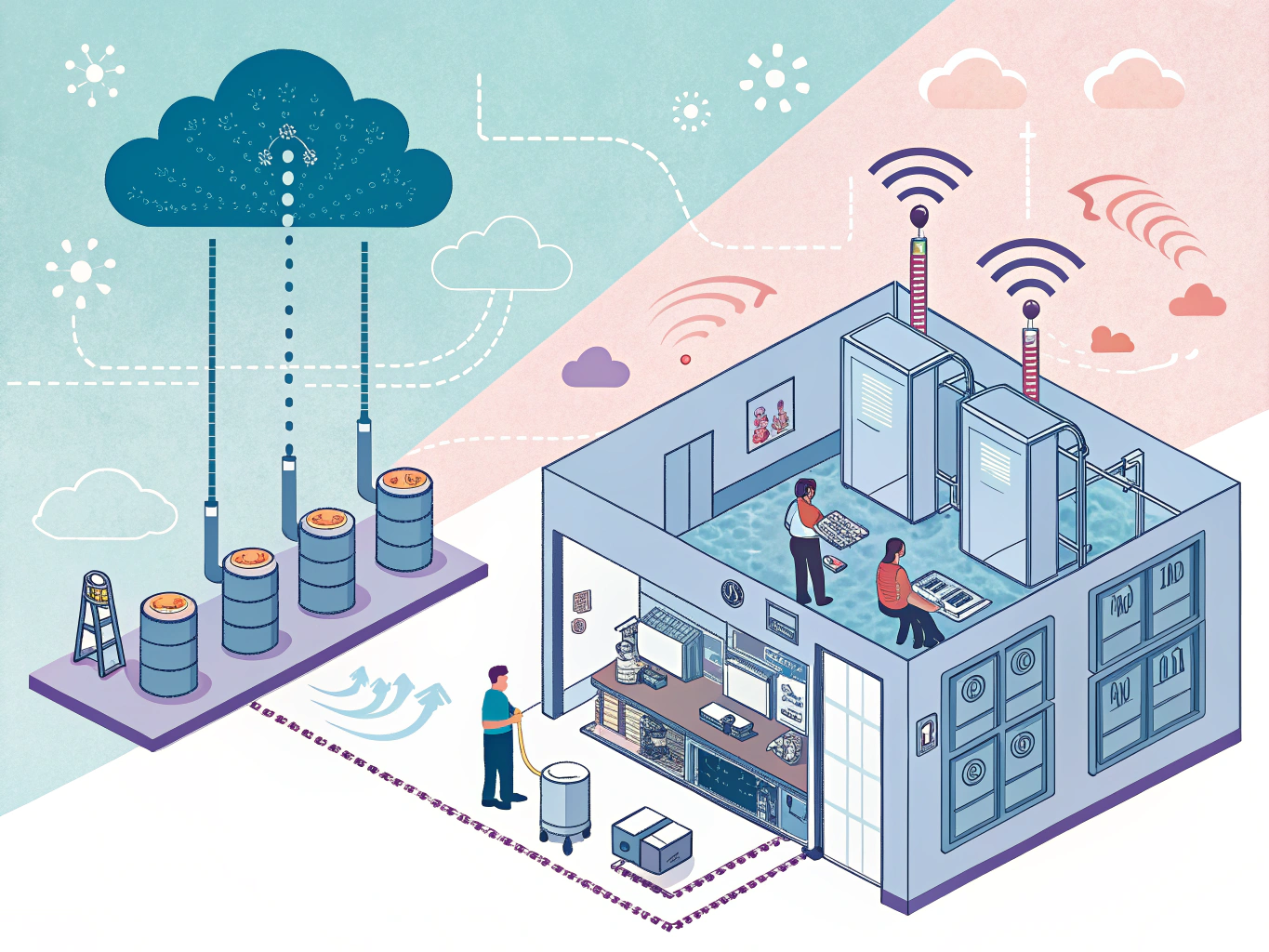
Here's where machine learning transforms data into foresight. Algorithms analyze historical failure patterns alongside current equipment behavior, learning what combinations of sensor readings precede breakdowns. The system identifies subtle anomalies you'd never catch manually.
The result: predictive models that forecast when equipment will fail with 85-90% accuracy within specified time windows. Your maintenance team receives automated alerts days or weeks before problems occur, not after your line shuts down.
You're no longer reacting to crises. You're scheduling maintenance strategically, minimizing downtime, and extending equipment lifespan. That's the difference between fighting fires and preventing them entirely.
Key Technologies Behind Predictive Maintenance Analytics
The foundation of any predictive maintenance program rests on five interconnected technologies that work together to transform raw equipment data into actionable insights.
IoT sensors are your eyes and ears on the factory floor. Sensors and IoT devices collect real-time data on temperature, vibration, pressure, and other operational parameters, continuously monitoring equipment health. Without this constant stream of information, you're essentially flying blind. The cost of deploying sensors has dropped significantly, making comprehensive asset monitoring economically viable even for mid-market operations.
Cloud platforms handle the computational heavy lifting. They store massive volumes of historical data and process it at scale without requiring massive on-premise infrastructure investments. This accessibility matters: your maintenance team can access predictions from anywhere, enabling faster response times.
Machine learning models are where prediction actually happens. These algorithms learn from your equipment's unique failure patterns and environmental factors specific to your operations. Substantial volumes of time-series historical and failure data are vital for these models to improve accuracy over time. Better data in equals better predictions out.
CMMS integration closes the loop between prediction and action. When your system detects an impending failure, it automatically triggers work orders and schedules maintenance before breakdown occurs. This eliminates the coordination gap that typically delays reactive repairs.
Digital twins create virtual replicas of your physical assets, enabling you to simulate different failure scenarios and test maintenance strategies without touching production equipment. This reduces risk and accelerates optimization.
Each technology serves a specific purpose, but their real power emerges when integrated into a cohesive system that transforms maintenance from reactive firefighting into proactive precision.
Quantifying the ROI: Real Numbers Behind Predictive Maintenance
The financial case for predictive maintenance isn't theoretical. It's written in spreadsheets across Fortune 500 companies, and the numbers demand attention.
Consider the baseline: predictive maintenance reduces maintenance costs by 5-10% and increases equipment uptime by 10-20%. For a mid-sized manufacturer spending $5 million annually on maintenance, that's $250,000 to $500,000 in direct savings. But that's just the beginning.
The real impact emerges when you quantify downtime avoidance. Manufacturing operations see 30-50% reductions in unplanned downtime, which translates to production hours recovered and revenue protected. A single unexpected shutdown can cost $10,000 to $250,000 per hour depending on your industry. Prevent three major failures annually, and you've already justified the investment.
Here's what moves CFOs: the U.S. Department of Energy research shows predictive maintenance delivers roughly 10 times the implementation cost in ROI. Real companies prove this daily. PETRONAS saved $33 million since implementing predictive analytics in 2019, while Chrysler detected issues across 100+ machines and avoided $112,000 in repair costs through early intervention.
Payback happens fast. Most implementations achieve ROI within 12-36 months; critical assets often break even in 6-18 months. 95% of organizations adopting predictive maintenance report positive ROI, making this one of the highest-confidence operational investments available.
The question isn't whether you can afford predictive maintenance. It's whether you can afford not to implement it while competitors capture these gains.

Implementation Challenges and How to Overcome Them
Let's be direct: implementing data analytics predictive maintenance isn't friction-free. But understanding the real obstacles beats discovering them mid-deployment.
Legacy systems are the first hurdle. 31% of companies still manage their asset registers in spreadsheets, which creates integration nightmares. The solution isn't ripping everything out. Start with API bridges or middleware that translate between old systems and new analytics platforms. Gradual migration beats the all-or-nothing approach.
Data quality matters more than data quantity. Your machine learning models need clean historical data to learn equipment failure patterns. Most organizations discover their data is fragmented, inconsistent, or incomplete. Spend time upfront cleaning and standardizing data before training models. This feels tedious but prevents costly prediction failures later.
Your team likely lacks data science expertise. That's normal. You don't need internal PhDs; you need partners who understand both the technology and your operational context. Look for implementation teams that can translate between data scientists and maintenance technicians.
Budget reality: expect $50,000 to $1 million-plus depending on scope and infrastructure requirements. The cost stings, but compare it against what unplanned downtime costs you annually. Most organizations break even within 18 months through reduced failures and extended equipment life.
Organizational resistance is real. Teams comfortable with reactive maintenance may view predictive systems as threats. Frame implementation as making their jobs smarter, not eliminating them. Early wins with specific equipment build momentum.
The path forward requires honest conversations with stakeholders about timelines, investment, and realistic expectations. That transparency builds the buy-in you need.
Measuring Success: Key Performance Indicators for Predictive Maintenance
You can't improve what you don't measure. The difference between predictive maintenance that delivers and predictive maintenance that disappoints comes down to tracking the right metrics and acting on them consistently.
Start with reliability fundamentals: Mean Time Between Failures (MTBF) and Mean Time To Repair (MTTR). MTBF tells you how long equipment runs before failure; MTTR measures how quickly your team responds. Both directly impact your bottom line. Predictive maintenance can extend equipment lifespan by 20-40%, but only if you're monitoring these numbers monthly.
Next, focus on unplanned downtime reduction. This is where leadership feels the pain. Calculate the cost per hour of unexpected equipment failure, then track how many hours you've prevented. This number resonates in budget meetings because it speaks directly to revenue protection.
Overall Equipment Effectiveness (OEE) combines availability, performance, and quality into one powerful metric. Target improvements of 5-10% within the first year of implementation. Your operations team should track this weekly.
For the financial case, measure maintenance cost savings as a percentage of total maintenance spend. Most organizations see 10-25% reduction within 12-18 months. Equally important: monitor your preventive-to-reactive maintenance ratio. As you mature in predictive maintenance, this should shift dramatically toward prevention.
ROI typically materializes within 12-18 months of deployment, with payback periods averaging 12-36 months depending on equipment criticality and failure costs.
Create a simple dashboard tracking five metrics: MTBF, unplanned downtime hours, OEE, maintenance cost reduction percentage, and ROI. Review it monthly with operations and finance. This transparency builds momentum and justifies continued investment in your predictive maintenance program.
Frequently Asked Questions About Predictive Maintenance Analytics
How long until we see ROI?
ROI typically arrives within 12-18 months of deployment, with critical assets hitting payback in as little as 6-18 months. The timeline depends on equipment criticality, failure frequency, and downtime costs. A single prevented failure on high-value machinery often justifies the entire investment immediately.
What data do we actually need?
Start with what you already have: historical failure records from your CMMS, sensor readings (vibration, temperature, pressure), maintenance logs, and production schedules. You don't need perfect data. Most systems work effectively with 12-24 months of historical information and real-time sensor feeds. Legacy equipment without sensors? That's solvable through retrofitting, though it adds upfront cost.
Can we retrofit older equipment?
Yes. Legacy assets can absolutely run predictive models; you'll just need to install sensors and establish connectivity to your analytics platform. The investment pays for itself quickly when you're preventing unplanned downtime on critical systems.
Predictive versus preventive: what's the real difference?
Preventive maintenance follows fixed schedules regardless of actual equipment condition, leading to unnecessary service calls and premature part replacement. Predictive maintenance uses real-time data to tell you exactly when maintenance is needed, eliminating guesswork and waste.
How accurate are these models really?
Well-implemented systems achieve 85-90% accuracy in predicting failures within specified timeframes. That's accurate enough to make confident maintenance decisions while maintaining safety margins. Accuracy improves continuously as your system ingests more operational data.
Which industries benefit most?
Manufacturing, energy, utilities, pharmaceuticals, and infrastructure are primary beneficiaries, though any operation relying on physical equipment sees gains. Supply chain managers, security agencies managing critical infrastructure, and IT teams maintaining production systems all experience significant ROI improvements.
The common thread: if equipment failure disrupts operations or safety, predictive maintenance delivers measurable value.
Key Takeaways and Your Next Steps
The path forward is clear: predictive maintenance delivers 10x ROI and cuts unplanned downtime by 30-50%, making it non-negotiable for staying competitive. Here's your action plan.
Start now, not next year. Identify your three most critical assets, those that cause the biggest operational headaches when they fail. Run a 90-day pilot on just these machines. This isn't about transforming everything overnight; it's about proving the business case with real data from your operation.
Data quality determines success. Your machine learning models will only perform as well as the historical data feeding them. Audit your sensor data, maintenance logs, and equipment records now. Gaps here will limit accuracy later.
Measure what matters. Track Mean Time Between Failures (MTBF), Mean Time To Repair (MTTR), and unplanned downtime reduction. These metrics become your proof points for scaling across the enterprise and securing budget for the next phase.
Get expert partnership. Legacy systems, organizational resistance, and technical complexity require experienced guidance. The right analytics partner handles integration challenges and drives adoption across your teams.
Your competitive window is closing. Organizations moving now will establish operational superiority their competitors struggle to match. The question isn't whether to implement predictive maintenance, but whether you'll lead or follow.
Start Your Predictive Maintenance Journey Today
The reality is stark: Fortune Global 500 companies lose $1.4 trillion annually due to unplanned downtime. Every month you delay is money leaving the table.
Predictive maintenance analytics isn't theoretical anymore. It's operational. Organizations shifting from reactive firefighting to proactive precision are capturing measurable ROI: reduced downtime, extended equipment life, and optimized maintenance budgets. The market is accelerating at 4.5x growth through 2029, and early movers are already pulling ahead.
Your next step is clear. Audit your current maintenance maturity. Identify which critical assets drain the most resources. Pilot a focused predictive maintenance program on one production line or facility.
The transition from chaos to precision happens fast when you have the right partner. Teams across supply chain, energy, security, and infrastructure are implementing predictive analytics at scale and seeing results within quarters, not years.
Stop accepting downtime as inevitable. Start building the operational resilience your business demands.
Keep reading

Critical Third Parties: UK Cloud Rule Explained
A Critical Third Party is a provider whose service failure could threaten UK financial stability. The first UK designations are four cloud providers.

Netflix Earnings Put Always-On TV in Focus
Netflix reports Q2 results July 16 after reports it is weighing always-on channels. Arkolith maps NFLX to $284.0B in tracked 13F value.

UK Cloud Watchlist Maps to $4.45T in 13F Value
The UK's first cloud oversight list maps to Microsoft, Alphabet, Amazon and Oracle, which Arkolith tracks across $4.45T of Q1 2026 13F value.