Building an Effective Enterprise Data and Analytics Strategy
Last Updated: March 1, 2026
Key Takeaways
- Enterprise data strategy shifts from accumulation to activation, embedding intelligence in daily workflows
- Governance, architecture, and real-time analytics form the foundational pillars of effective strategies
- 80% of employees will consume insights within business apps by 2026, not separate dashboards
- Predictive analytics transforms supply chains, enabling proactive risk management and demand forecasting
- Executive sponsorship and data-driven culture are critical success factors for implementation
What Is Enterprise Data and Analytics Strategy?
Your organization likely has more data than ever before. Yet most enterprises still operate like it's 2015, buried in backward-looking reports that answer questions from last quarter instead of anticipating problems next week.
Enterprise data and analytics strategy is fundamentally your blueprint for how data flows through your organization, from collection to activation. But here's what separates winning companies from the rest: they've stopped treating data as something to accumulate and started treating it as something to activate.
The distinction matters enormously. Having data and using data are completely different propositions. You can store petabytes of historical information and still miss a supply chain disruption unfolding in real time. You can track every transaction and still fail to detect emerging fraud patterns before they cost millions. You can monitor energy consumption and still miss opportunities to optimize costs before next month's bill arrives.
Analytics is no longer a back-office function; it becomes a strategic capability influencing revenue growth, risk management, supply chain optimization, and customer experience. For supply chain leaders, this means predicting disruptions rather than reacting to them. For security teams, it means identifying threats before they materialize. For finance and municipal leaders, it means moving from compliance reporting to forward-looking intelligence that actually shapes decisions.
The shift is urgent because enterprises are beginning to treat data strategy as a competitive discipline rather than an internal optimization exercise. Your competitors are already moving. The question isn't whether to transform. It's whether you'll lead the change or follow it.

The Five Pillars of Enterprise Data Strategy
A robust enterprise data strategy rests on five interconnected pillars that must work in concert, not isolation.
Governance establishes who owns data, how it's stewarded, and what controls ensure consistency across your organization. Without it, you inherit chaos: duplicate records, conflicting definitions, compliance violations. In supply chain operations, governance means declaring a single source of truth for inventory levels so procurement, logistics, and finance work from identical numbers.
Architecture is your blueprint for collecting, storing, and managing data across systems as your business scales. Enterprise data strategy should rationalize logical and physical data architecture and provide a road map to phase out legacy systems. A security organization, for instance, needs architecture that ingests logs from firewalls, endpoints, and cloud platforms into a unified platform where analysts can correlate threats in real time.
Analytics and BI enablement transforms raw data into usable insights. This means dashboards that answer "why did revenue drop this quarter?" and reports that reach decision-makers automatically. It's the difference between data sitting in warehouses and data driving action.
AI and ML infrastructure supports advanced pattern recognition and autonomous decision-making. Supply chain teams use predictive models to forecast demand; security teams deploy anomaly detection to catch breaches faster than human analysts ever could.
Organizational culture binds everything together. Strong executive sponsorship is the single most important factor in the success of a data strategy. When leadership visibly prioritizes data-driven decisions and allocates resources accordingly, the entire organization follows. Culture determines whether your strategy becomes reality or stays a presentation on a shelf.
Governance and Data Quality: The Foundation Everything Rests On
Here's the section:
Most enterprises treat data governance as a compliance checkbox rather than a competitive advantage. That's backwards. Governance is actually your permission structure for moving faster, not slower.
Here's why this matters urgently: poor data quality doesn't just produce bad reports; it sabotages your ability to act on insights at scale. When your analytics team spots a trend, they can manually validate it. When an AI system encounters gaps, ambiguity, or inconsistent definitions, it simply produces confident-sounding nonsense. Autonomous agents don't smooth over data problems the way people do; they expose them. This is why most organizations remain stuck in generative AI pilots rather than moving to production.
Effective governance has three practical pillars:
Metadata management gives your organization a shared understanding of what data actually means. Without it, different departments define "customer" differently, rendering cross-functional analysis unreliable. Document data lineage, ownership, and refresh cycles so teams know whether they're looking at yesterday's information or last quarter's.
Data quality standards must be measurable and non-negotiable. Define acceptable thresholds for completeness, accuracy, and timeliness. Make quality ownership clear; someone owns the data, period.
Compliance and trust work together. Clear governance ensures consistency, compliance, and accountability across your organization, which builds internal credibility. When analysts and leaders trust that data is clean and complete, they actually use it for decision-making rather than requesting yet another validation pass.
The framework itself should enable experimentation, not prevent it. Build guardrails, not walls. Your governance structure should scale with your enterprise without requiring a team of auditors for every new data initiative.
Building Your Data Platform Architecture
Your enterprise data platform needs to serve multiple purposes simultaneously, which means architecture choices matter far more than they used to. Rather than forcing all data into a single system, modern enterprises are adopting distributed architectures that balance speed, compliance, and cost.
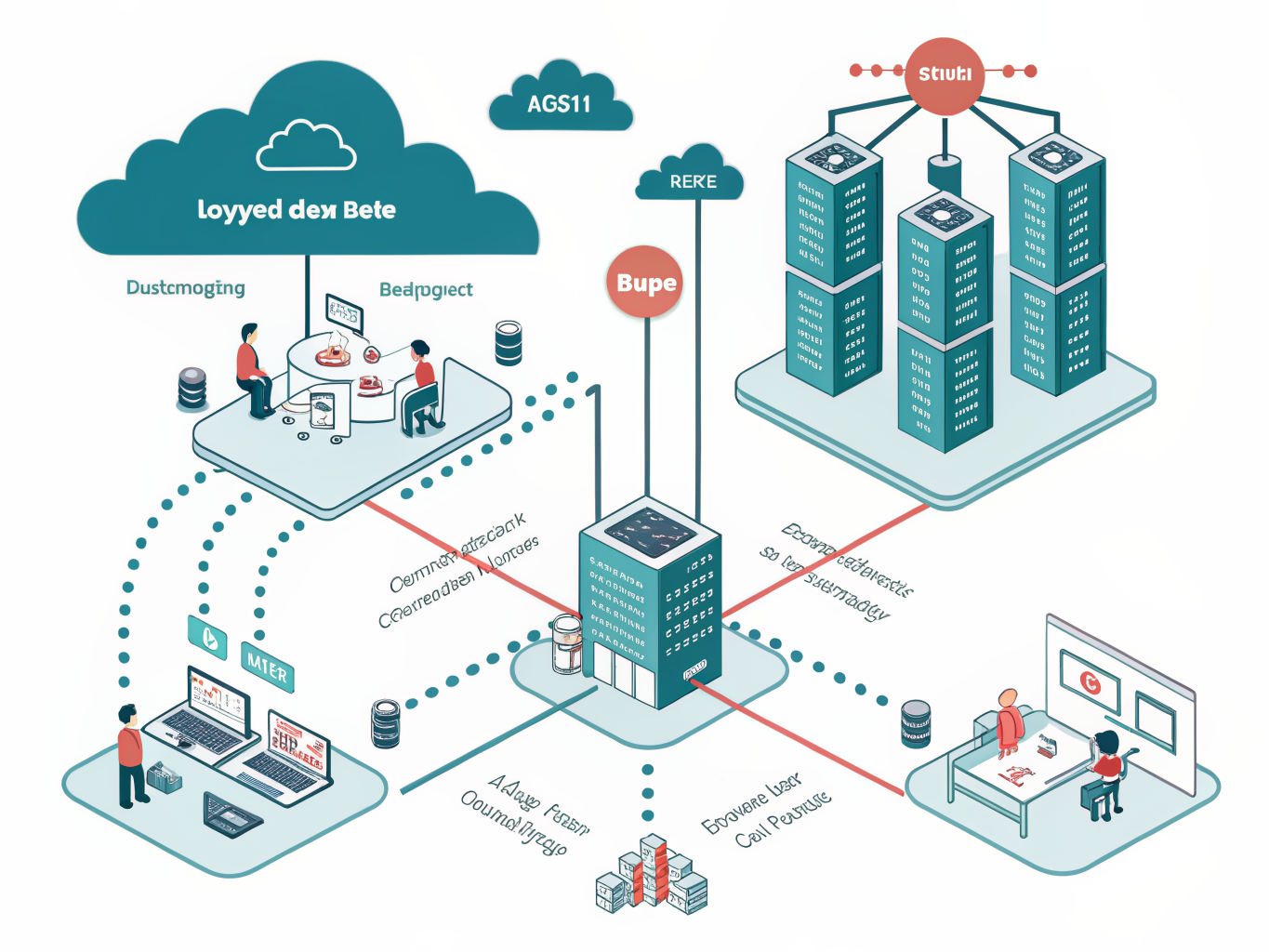
The core decision isn't about cloud versus on-premise anymore. Hybrid cloud has emerged as the dominant design pattern for enterprise scale, offering flexibility and cost control across multiple providers. This approach lets you keep sensitive data on-premise while leveraging cloud resources for computational workloads, satisfying both compliance officers and CFOs.
Within this framework, you'll choose between data warehouses (structured, optimized for analytics), data lakes (flexible storage for raw data), or lakehouses (combining both). Your latency requirements drive this decision. Need real-time dashboards? You'll need platforms supporting continuous data ingestion and transformation. Regulatory constraints? Certain industries demand on-premise retention regardless of where processing occurs.
The real shift is moving from single-platform thinking to multi-platform ecosystems. Your marketing team might need different tools than your operations team. Rather than forcing one solution, effective architecture supports diverse workloads while maintaining governance.
Edge analytics represent the frontier here. High-powered edge hardware now enables collecting and analyzing data in real time at the source, crucial for manufacturing, IoT, and autonomous systems. This reduces latency and network costs while improving responsiveness.
The question isn't which architecture is "best." It's which architecture lets your organization activate data faster than competitors while managing risk and cost. Start with your most pressing business problems, then build backwards to infrastructure. This prevents over-engineering while keeping your platform aligned with actual business outcomes.
Activating Data Through Real-Time Analytics and AI
The future of enterprise data isn't about collecting more information. It's about making insights impossible to ignore.
Today, most organizations still operate with a fundamental disconnect: data lives in dashboards while decisions happen in email, spreadsheets, and meetings. That's changing fast. 80% of employees will consume insights directly within the business applications they use every day by 2026, meaning analytics must move from separate tools into the operational workflows where work actually gets done.
This shift requires embedding intelligence into the applications your teams already use. Instead of asking employees to visit a BI platform, insights surface automatically where decisions are made. A sales manager sees predictive churn scores directly in their CRM. A supply chain manager gets real-time anomaly alerts in their planning system. A finance leader spots forecast deviations instantly within their ERP.
The second transformation involves how people access insights. Autonomous analytics copilots using natural language allow users to ask questions and receive answers without writing SQL. This democratization is profound. Your frontline employees become data explorers without needing technical training, accelerating decision velocity across the organization.
Perhaps most importantly, enterprises are shifting from describing what happened to predicting what will happen. Predictive and prescriptive analytics are overtaking historical reporting as the primary focus, enabling teams to act before problems escalate. Real-time decision intelligence surfaces anomalies automatically and can even trigger actions without human intervention.
This is data activation: insights embedded in operational workflows, not siloed in tools. It transforms analytics from a reporting function into a competitive engine that shapes how your organization moves and responds.
Enterprise Data Strategy in Action: Supply Chain Analytics
Consider a global manufacturer facing a critical challenge: demand surges 40% unexpectedly, but procurement teams don't know it for three weeks. By then, suppliers are already allocated elsewhere. Stock-outs cascade through distribution networks. Revenue suffers. This reactive trap defines most supply chain operations today.

The shift from reactive to proactive starts with unified data architecture. When demand signals, inventory levels, supplier capacity, and logistics costs live in separate systems, you're flying blind. A cohesive data model integrates these sources into a single source of truth, enabling predictive analytics in supply chain to forecast demand, prevent disruptions, and optimize logistics.
Real-world outcomes demonstrate the impact. Organizations deploying predictive analytics reduce forecast errors by 25-35%, cut safety stock by 20%, and accelerate decision cycles from weeks to hours. Supply chain visibility from procurement through last-mile delivery transforms operations from cost containment into competitive advantage.
This isn't theoretical. When your system detects early demand signals across point-of-sale data, social trends, and supplier commitments, procurement teams act before disruption hits. Risk prediction models flag geopolitical exposure or supplier financial stress months ahead. Inventory optimization algorithms balance holding costs against service levels in real time.
The organizations winning today aren't those with the most data. They're the ones activating data into decisions. Supply chain leaders who build this capability convert operations from necessary expenses into strategic assets that directly influence profitability and resilience.
Implementing Your Enterprise Data Strategy: Key Success Factors
Success hinges on five critical moves. First, secure genuine executive sponsorship from your C-suite before launching anything substantial. Strong executive sponsorship is the single most important factor in the success of a data strategy. Without it, your initiative stalls when priorities shift.
Second, assemble a cross-functional team combining data engineers, analysts, and business domain experts. Siloed teams produce siloed solutions that nobody uses. Your team needs people who understand both the technical constraints and the business realities.
Third, start with business objectives, not technology. Define what success looks like in concrete terms: revenue growth, risk reduction, operational efficiency. Then choose platforms and tools that serve those goals, not the reverse.
Fourth, establish data governance early. This doesn't mean creating bureaucracy; it means agreeing on data definitions, ownership, and quality standards before chaos sets in. Governance evolves as your organization matures, but the foundation matters now.
Finally, measure what actually matters. Track business metrics like revenue impact and cost savings, not just technical metrics like query speed. This keeps stakeholders aligned and justifies continued investment.
Expect 6-12 months before seeing substantial results, but identify quick wins within the first 90 days. These early successes build momentum and demonstrate value to skeptics. Common pitfalls include choosing technology before clarifying objectives, underestimating change management, and treating data strategy as an IT project rather than a business transformation. Avoid these, and you're already ahead of most enterprises.
Conclusion: The Competitive Imperative of Modern Data Strategy
The organizations winning today share a common trait: they've stopped treating data as an asset to accumulate and started treating it as a capability to activate. This shift from reactive to proactive isn't a nice-to-have anymore; it's survival.
Consider what's at stake. Supply chain managers who can predict disruptions weeks in advance don't just avoid costly delays; they capture market share from competitors still reacting to problems. Security agencies leveraging real-time threat intelligence stop incidents before they happen. Energy companies optimizing operations through predictive analytics reduce costs while competitors remain locked in manual processes. Financial leaders making decisions on current data, not yesterday's reports, consistently outperform peers. Organizations that fail to align with AI analytics trends risk slower decision cycles, fragmented insights, and competitive disadvantage.
The math is simple: data advantage compounds. Every quarter you delay modernizing your strategy, competitors gain ground. The gap widens. The cost of catching up increases.
But here's what matters most: success requires more than new tools. It demands alignment across technology, governance, and culture. Your data strategy must connect to business outcomes, not just dashboards. It must empower decision-makers at every level with insights they can act on immediately.
The time for incremental improvements has passed. Your next move should be clear: audit where you stand today, identify your biggest decision bottlenecks, and commit to activation over accumulation. The organizations that move decisively now won't just survive the next decade of competition; they'll define it. Your competitive advantage isn't waiting for perfect conditions. It's waiting for you to act.
Keep reading

Critical Third Parties: UK Cloud Rule Explained
A Critical Third Party is a provider whose service failure could threaten UK financial stability. The first UK designations are four cloud providers.

Netflix Earnings Put Always-On TV in Focus
Netflix reports Q2 results July 16 after reports it is weighing always-on channels. Arkolith maps NFLX to $284.0B in tracked 13F value.

UK Cloud Watchlist Maps to $4.45T in 13F Value
The UK's first cloud oversight list maps to Microsoft, Alphabet, Amazon and Oracle, which Arkolith tracks across $4.45T of Q1 2026 13F value.