Grid Optimization Software: Essential Guide for 2026
Last Updated: February 24, 2026
Key Takeaways
- Grid optimization software combines AI, predictive analytics, and real-time monitoring to automate energy management across complex networks
- Leading solutions reduce interconnection processing times by 50%, improve data quality by 90%, and handle outages 30% faster
- Advanced DERMS and ADMS platforms enable utilities to integrate renewables, manage distributed energy resources, and operate grids closer to capacity limits
- Data-driven decision-making and autonomous controls unlock cost savings, improved reliability, and accelerated energy transition for enterprises
What is Grid Optimization Software?
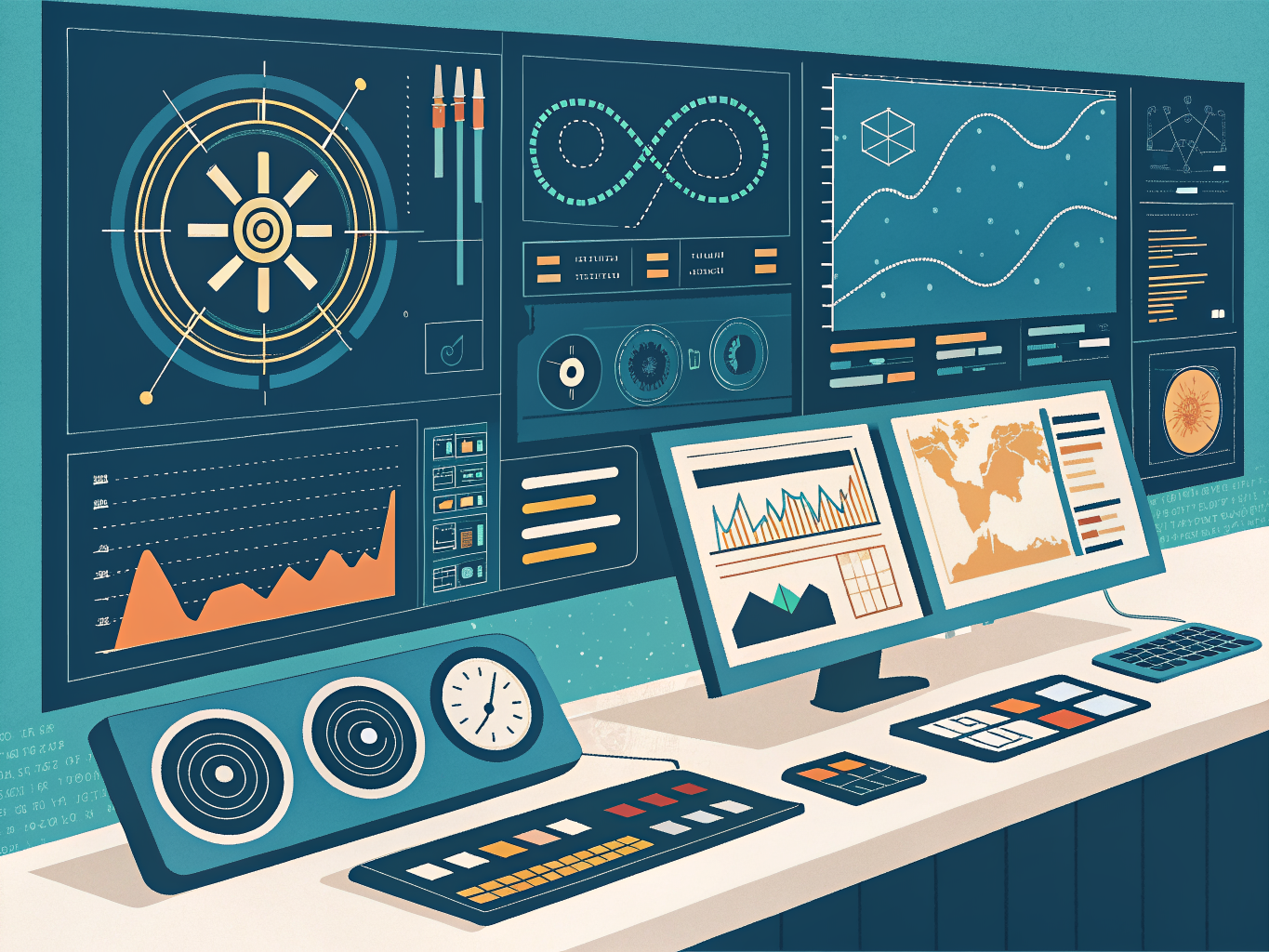
Grid optimization software is fundamentally a digital command center for energy operations. It combines real-time monitoring, predictive analytics, and autonomous controls to digitize and automate how utilities and enterprises manage electricity flow across their networks, from generation through consumption.
Why does this matter now? Consider the pressures converging on grid operators. Electricity demand is rising sharply due to electrification and AI computing workloads, according to ARPA-E funded research. Simultaneously, renewable energy sources like solar and wind create unpredictable supply patterns. Distributed energy resources (DERs) such as rooftop solar, batteries, and EV chargers are fragmenting the traditional one-way power flow. Aging infrastructure wasn't designed for this complexity.
Without optimization software, grid operators manage these challenges reactively, responding to problems after they occur. This approach is expensive, unreliable, and increasingly inadequate.
Grid optimization software shifts this paradigm. It processes vast amounts of data to predict demand patterns, anticipate equipment failures, and dynamically balance supply and demand in real time. The software can automatically reroute power flows, coordinate distributed resources, and prevent blackouts before they happen.
Grid optimization software digitizes and automates grid planning and operations, enabling operators to see the entire system as an integrated whole rather than isolated components. For utilities, this means lower operational costs, improved reliability, and the ability to integrate more renewables safely. For enterprises managing their own energy resources, it translates to reduced electricity expenses and resilience against grid disruptions.
In 2026, grid optimization software isn't a nice-to-have enhancement. It's essential infrastructure for energy operations in an increasingly complex, electrified world.

Core Features of Modern Grid Optimization Solutions
Modern grid optimization software operates on several interconnected capabilities that transform how utilities manage energy delivery. Let's break down what actually matters for your operations.
Real-time monitoring forms the foundation. Your software continuously tracks grid conditions, power flows, voltages, and system status across your entire network. Real-time grid monitoring is vital for identifying faults, potential failures, and power quality issues. This isn't just about seeing what's happening; it's about catching problems before they cascade into outages.
Predictive analytics layers intelligence on top of that raw data. The software analyzes historical patterns to forecast load demand and predict equipment failures before they occur. AI and machine learning can analyze large quantities of data to gain insights into energy consumption patterns and peak demand periods, helping you allocate resources more effectively and avoid costly downtime.
AI-powered forecasting has become essential for renewable integration. Your system learns from weather patterns, time-of-use behaviors, and grid dynamics to predict renewable generation and demand fluctuations with surprising accuracy. This capability directly impacts your ability to balance supply and demand without expensive reserve capacity.
Automated control systems represent the real competitive edge. Rather than waiting for operators to react, the software executes corrective actions in milliseconds, adjusting voltage regulators, switching capacitor banks, and rerouting power flows. This speed prevents minor imbalances from becoming major incidents.
Finally, data fabric integration pulls everything together. Smart grid analytics applies advanced analytics including predictive and prescriptive analytics, forecasting and optimization across your SCADA systems, AMI networks, weather services, and renewable sources. Connected data means better decisions.
These features work in concert, shifting you from reactive firefighting to proactive intelligence that runs continuously, 24/7.
How Grid Optimization Software Drives Business Value
The financial case for grid optimization software is compelling. Utilities implementing these solutions report 5-10% reductions in operational costs through optimized energy scheduling and minimized transmission losses. When you're managing billions in annual spending, that translates to millions in savings.
Beyond cost control, reliability improvements drive significant competitive advantage. Grid optimization software with predictive capabilities allows utilities to make faster, proactive decisions, enabling your team to prevent outages rather than react to them. Predictive analytics unlock proactive planning and predictive maintenance that lead to reduced downtime and optimized asset lifecycles, protecting both your reputation and bottom line.
The integration advantage matters more each year. As distributed energy resources multiply and interconnection queues grow, software that accelerates DER integration and streamlines interconnection processing becomes essential infrastructure. Utilities moving faster here capture market share in renewable energy deployment.
Asset optimization deserves emphasis. Data-driven insights into equipment performance and lifecycle management let you make smarter infrastructure investment decisions. Rather than replacing aging assets on a schedule, you invest where it matters most, extending asset life and reducing capital expenditure.
Consider Duke Energy's experience: the company grew from 6 data scientists to 41 in five years due to value from grid analytics roles. That's not just hiring; that's recognizing where competitive advantage concentrates.
The renewable integration piece cannot be overstated. Grid optimization software manages variable renewable generation in real time, enabling higher penetration rates while maintaining stability. This directly supports decarbonization commitments while keeping grids reliable.
The utilities gaining ground in 2026 aren't those waiting for perfect conditions. They're implementing grid optimization software now, converting operational data into competitive advantage through faster decisions, lower costs, and superior reliability.
Leading Grid Optimization Platforms and Solutions
The grid optimization software market has matured significantly, offering utilities a range of solutions tailored to specific operational challenges and organizational scale.
Enterprise vendors dominate the advanced distribution management systems (ADMS) and distributed energy resource management systems (DERMS) space. GE Vernova ranks as the number one provider in the Guidehouse Insights 2024 Leaderboard for Grid DERMS vendors, reflecting strong capabilities in real-time coordination and renewable integration. Siemens brings decades of grid expertise through Gridscale X LV Insights, which automates model creation to improve data quality by 90% and handles outages 30% faster. These platforms excel at handling complex, interconnected systems across transmission and distribution networks.
For utilities focused on planning acceleration, envelio's Intelligent Grid Platform digitizes and automates grid planning and operations, reducing interconnection processing times by 50%. This addresses a critical pain point: lengthy queue times for distributed energy projects that slow revenue and sustainability goals.
Cloud-based SaaS solutions have democratized access to sophisticated optimization capabilities. These platforms offer rapid deployment without heavy infrastructure investment, making them attractive for utilities of all sizes. They typically integrate monitoring, analytics, and automation in unified dashboards, reducing the need for multiple vendor ecosystems.
The decision framework should prioritize three factors: integration depth with your existing systems, scalability as renewable penetration increases, and vendor commitment to autonomous capabilities. Mid-sized utilities often benefit from specialized edge solutions that manage localized microgrids or distribution circuits independently. Larger utilities typically require integrated platforms handling multiple operational layers simultaneously.
Avoid vendor lock-in by evaluating data portability and API openness. The best solution matches your grid's complexity, your team's technical capacity, and your five-year operational roadmap, not merely feature checklists.
Grid Optimization for Specific Use Cases and Industries
Grid optimization software delivers measurable value across distinct organizational functions, yet the benefits differ significantly depending on your role.
For utility companies, the software is non-negotiable. As renewable energy penetration increases, managing variable supply while maintaining grid stability becomes exponentially harder. Distributed energy resource management systems are crucial for integrating renewables and visualizing, controlling and simulating DERs connected to the grid. Beyond integration, semi-autonomous dispatch monitors and manages local grid constraints to help avoid costly network upgrades, protecting capital budgets while extending infrastructure life.
Municipal planners and smart city developers face a different pressure: coordinating EV charging infrastructure, rooftop solar, and microgrids without overwhelming existing networks. Grid optimization software provides the visibility and control needed to balance competing demands without infrastructure overhauls.
For energy companies optimizing generation dispatch, the software translates into operational efficiency. Real-time asset utilization improves margins, while predictive capabilities reduce unplanned downtime.
Compliance and security teams see grid optimization as risk mitigation. The software monitors for anomalies, strengthens resilience against outages, and creates audit trails for regulatory requirements. In today's threat environment, this visibility is increasingly essential.
Finance teams appreciate the bottom-line impact: optimized capital allocation, reduced operational costs, and quantifiable ROI from avoided infrastructure investments. Grid management software provides provisioning, management, and near real-time visibility across electric infrastructure, enabling data-driven budget decisions.
The common thread: organizations moving beyond reactive firefighting toward proactive, intelligence-driven operations gain competitive advantage. Whether your priority is stability, compliance, efficiency, or cost control, the right grid optimization software addresses it directly.
Implementation Roadmap and Best Practices
Successful implementation starts with honest assessment. Audit your current grid infrastructure to identify where optimization delivers the most immediate value, whether that's reducing peak demand costs, improving renewable integration, or enhancing reliability. This clarity prevents wasted effort on low-impact initiatives.
Next, evaluate vendors rigorously. Scalability matters less than interoperability; your software must communicate seamlessly with existing SCADA systems, weather data feeds, and forecasting tools. Security requirements aren't optional either. Request detailed penetration testing results and understand their data governance approach before signing anything.
Data preparation is where most implementations stumble. GE Vernova recommends creating a connected, validated data fabric with native interoperability across systems. Poor data quality will cripple even sophisticated algorithms. Invest time validating historical datasets and establishing clean data pipelines before going live.
Plan for phased rollout rather than big-bang deployment. Start with a pilot on a specific feeder or region, establish baseline metrics, and prove ROI before expanding. This approach reduces risk and builds internal confidence.
Change management is critical. Your operations team won't embrace autonomous intelligence overnight. Provide comprehensive training, create clear escalation procedures for when the software flags unusual conditions, and maintain transparent communication about how decisions are being made. When staff understand the "why" behind recommendations, adoption accelerates.
Finally, measure what matters: peak load reduction, forecast accuracy improvement, equipment utilization rates, and incident response time. These metrics demonstrate business value and justify continued investment.
The Future of Grid Optimization: Quantum Computing and Beyond
The next frontier of grid optimization isn't incremental improvement; it's fundamental transformation. Three converging technologies are reshaping what's possible.
Quantum computing represents the most ambitious leap. Traditional algorithms struggle with the staggering complexity of modern grids, where millions of variables interact simultaneously. ARPA-E's latest initiative shows that quantum-enhanced computing methods can solve hyper-complex optimization problems that would take classical computers years to process. Quantum computing applications promise improved energy affordability and increased grid stability through more efficient dispatch and resource optimization, directly addressing the affordability crisis utilities face.
Advanced AI moves beyond prediction to autonomy. Self-healing grids that automatically detect faults, reroute power, and optimize performance without human intervention are transitioning from concept to reality. This reduces response time from hours to milliseconds.
Edge computing brings decision-making to the grid itself. Rather than sending data to centralized systems, analytics happen locally at substations and across distributed assets. Combined with IoT sensor proliferation, this creates unprecedented real-time visibility into grid health and performance.
For organizations still managing grids reactively, these developments signal an urgent inflection point. Early adopters who invest now in quantum-ready, AI-enabled platforms will operate fundamentally more efficient, resilient systems by 2026. Those waiting risk competitive disadvantage as peers capture the efficiency gains and cost savings these technologies deliver. The transition from reactive management to autonomous intelligence isn't coming; it's already accelerating.
Key Takeaways and Action Steps
The evidence is clear: grid optimization software separates industry leaders from those falling behind. Organizations deploying these solutions report cost reductions exceeding 50%, faster renewable integration, and measurably improved reliability. This isn't theoretical advantage; it's operational reality reshaping competitive positioning across the energy sector.
The window for early adoption is narrowing. Utilities and grid operators who move now gain 18-24 months of operational learning and data advantage over slower competitors. That translates directly to better decision-making, faster problem resolution, and stronger positioning as grid modernization accelerates.
Here's your action plan: First, audit your current infrastructure honestly. Where are your biggest inefficiencies? Which bottlenecks cost you most? Second, establish a data foundation before selecting software. Poor data quality derails even excellent platforms. Third, partner with vendors who understand your specific challenges, not those offering generic solutions. Finally, start small with a pilot program targeting your highest-impact opportunity.
Don't wait for perfect conditions or complete certainty. The energy transition demands speed. Organizations that begin their optimization journey today will operate with measurably better intelligence, lower costs, and greater resilience by 2027. Your competitors are already moving. The question isn't whether to adopt grid optimization software, but how quickly you can implement it effectively.
Frequently Asked Questions About Grid Optimization Software
How long does implementation typically take?
Most deployments complete within 3 to 6 months, depending on your grid complexity and existing infrastructure. Initial setup and data integration usually consume the first 4 to 8 weeks; pilot testing follows. Utilities with cleaner legacy systems move faster.
What's the realistic ROI?
You'll see operational cost reductions of 10 to 20 percent within the first year through reduced outages, optimized dispatch, and lower ancillary service costs. Payback typically occurs within 18 to 30 months. Real benefits compound as the software learns your grid patterns.
Can it work with our old systems?
Yes. Modern grid optimization software uses APIs and middleware to connect with legacy SCADA, EMS, and billing platforms. You don't need to rip-and-replace your entire tech stack. Integration complexity varies, but it's rarely a dealbreaker.
What about cybersecurity?
Reputable vendors include encryption, role-based access controls, and continuous threat monitoring. Your software should comply with NERC CIP standards. Demand a security audit before committing and clarify incident response protocols.
How does it handle renewable variability?
The software uses real-time forecasting and machine learning to anticipate solar and wind fluctuations, then automatically adjusts conventional generation and storage. It doesn't eliminate intermittency; it manages it intelligently.
What training and support come standard?
Expect onboarding for your operations team, documentation, and dedicated support staff. Quality vendors offer 24/7 monitoring during critical periods. Don't accept vague support terms; specify response times and escalation paths upfront.
Conclusion: Transforming Grid Operations in 2026 and Beyond
The energy grid is at an inflection point. As GE Vernova notes, the modern grid needs to deliver reliable and efficient energy while managing continual increases in grid complexity, and traditional reactive management simply cannot keep pace.
Grid optimization software isn't a nice-to-have anymore. It's the operational backbone required to handle electrification surge, renewable variability, and decaying infrastructure simultaneously. Utilities implementing these solutions today are moving from constant firefighting to predictive intelligence. They're reducing outages, cutting costs, and building resilience while competitors scramble to catch up.
The competitive window is closing. Early adopters are securing market advantage, regulatory favor, and customer trust. Those delaying implementation face mounting pressure: higher operational costs, greater reliability risks, and vulnerability to grid failures that damage both revenue and reputation.
Your organization's energy security and economic resilience depend on this transition. Grid optimization software transforms how you operate, not just what you manage. The infrastructure is ready. The technology works. The business case is clear.
The question isn't whether to invest in grid optimization software. It's whether you can afford to wait. Start your assessment now. Map your grid complexity, identify your critical vulnerabilities, and commit to the transition. 2026 belongs to those moving forward today.
Keep reading

Critical Third Parties: UK Cloud Rule Explained
A Critical Third Party is a provider whose service failure could threaten UK financial stability. The first UK designations are four cloud providers.

Netflix Earnings Put Always-On TV in Focus
Netflix reports Q2 results July 16 after reports it is weighing always-on channels. Arkolith maps NFLX to $284.0B in tracked 13F value.

UK Cloud Watchlist Maps to $4.45T in 13F Value
The UK's first cloud oversight list maps to Microsoft, Alphabet, Amazon and Oracle, which Arkolith tracks across $4.45T of Q1 2026 13F value.