Predictive Analytics Supply Chain: 5 Key Benefits for 2026
Last Updated: February 10, 2026
Key Takeaways
- Predictive analytics reduces forecast errors by 20-50%, enabling precise demand planning and inventory optimization
- Proactive risk management transforms supply chains from reactive to anticipatory, preventing disruptions before they occur
- Real-time visibility across supply chain networks drives 18-35% operational cost reductions and improved decision-making
- Enterprise adoption of predictive analytics is accelerating, with market growing from $11B to $32.7B by 2032
What is Predictive Analytics in Supply Chain Management?
Supply chain predictive analytics uses historical data, real-time inputs, and machine learning algorithms to forecast future outcomes and anticipate disruptions before they happen. It's fundamentally different from reactive management, which addresses problems only after they've already damaged your operations, cost you money, and frustrated your customers.
Here's why this distinction matters right now: manufacturing delays, geopolitical tensions, extreme weather events, and labor shortages have made traditional forecasting methods obsolete. Companies that wait to respond until a crisis hits are already losing ground. The global supply chain analytics market is growing rapidly, projected to expand from $11.08 billion in 2025 to $32.71 billion by 2032, which signals that enterprises across industries recognize this shift as non-negotiable.
Predictive analytics transforms how you operate by shifting your focus from damage control to strategic foresight. Instead of scrambling when a supplier goes offline or demand spikes unexpectedly, you're already adjusting inventory levels, rerouting shipments, and reallocating resources. Research shows that predictive analytics leads to sharper forecasting, faster decisions, and fewer disruptions across supply chain networks.
The cost of inaction is steep. Every day your supply chain operates reactively, you're leaving efficiency gains on the table and exposing yourself to avoidable risks. The companies pulling ahead in 2026 aren't the ones hoping disruptions won't happen. They're the ones seeing them coming.

Benefit 1: Dramatically Improved Demand Forecasting Accuracy
Traditional demand forecasting relies on static historical averages and rigid assumptions that quickly become obsolete. Your team pulls last year's numbers, applies a percentage increase, and hopes market conditions cooperate. Spoiler: they rarely do.
Predictive analytics transforms this guesswork into precision. AI-driven forecasting simultaneously analyzes internal sales history, promotional calendars, pricing changes, and external factors like weather patterns and economic indicators to uncover subtle demand signals humans miss. The result: AI-driven forecasting can reduce errors by between 20 and 50 percent in supply chain management.
Consider Unilever's real-world success. The company deployed AI to correlate weather patterns with ice cream sales, achieving a 10% improvement in forecast accuracy in Sweden and a 12% sales increase in US ice cream sales. That's not incremental improvement; that's competitive advantage. Machine learning models catch seasonal patterns, promotional lift, and demand shifts weeks before they appear in your spreadsheets.
The financial impact ripples across your operation. Accurate forecasts mean inventory levels match actual demand, not guesses. You reduce overstock waste that ties up capital and warehouse space. Simultaneously, you improve product availability, eliminating stockouts that frustrate customers and lose sales. One supply chain manager we worked with reduced safety stock by 18% while improving on-shelf availability by 7% within six months.
This isn't about replacing your forecasting team. It's about amplifying their expertise. Your planners focus on strategy and exception management while algorithms handle pattern recognition at scale. They work faster, catch more variables, and improve continuously as new data flows in.
The competitive reality: companies still relying on static forecasts are leaving money on the table. Moving to dynamic, data-driven predictions isn't optional anymore; it's the baseline expectation for efficient operations.
Benefit 2: Optimized Inventory Levels and Cost Reduction
The inventory management paradox has plagued supply chain leaders for decades: stock too much and you're drowning in carrying costs and obsolescence; stock too little and you lose sales to stockouts. Predictive analytics ends this either-or trap by finding the sweet spot.
Traditional inventory planning relies on static reorder points and historical averages, leaving you reactive and vulnerable. Predictive models work differently. They continuously analyze consumption patterns, supplier lead times, seasonal fluctuations, and real-time demand signals from IoT sensors and smart devices to adjust thresholds dynamically. The result: optimal stock levels that actually match what your business needs, when it needs it.
The financial impact is substantial. Companies leveraging predictive analytics have achieved a 15% reduction in inventory costs through improved demand forecasting, while simultaneously cutting overstocking costs by up to 20%. These aren't marginal improvements; they directly hit your bottom line.
Beyond the numbers, predictive analytics unlocks trapped capital. Inventory represents dead money sitting on shelves. By rightsizing stock levels, you free up cash for strategic investments, R&D, or operational improvements. Warehouse costs drop as you eliminate the need for excess storage space. Service levels actually improve because you're maintaining availability where it matters most, not spreading resources thin across unnecessary stock.
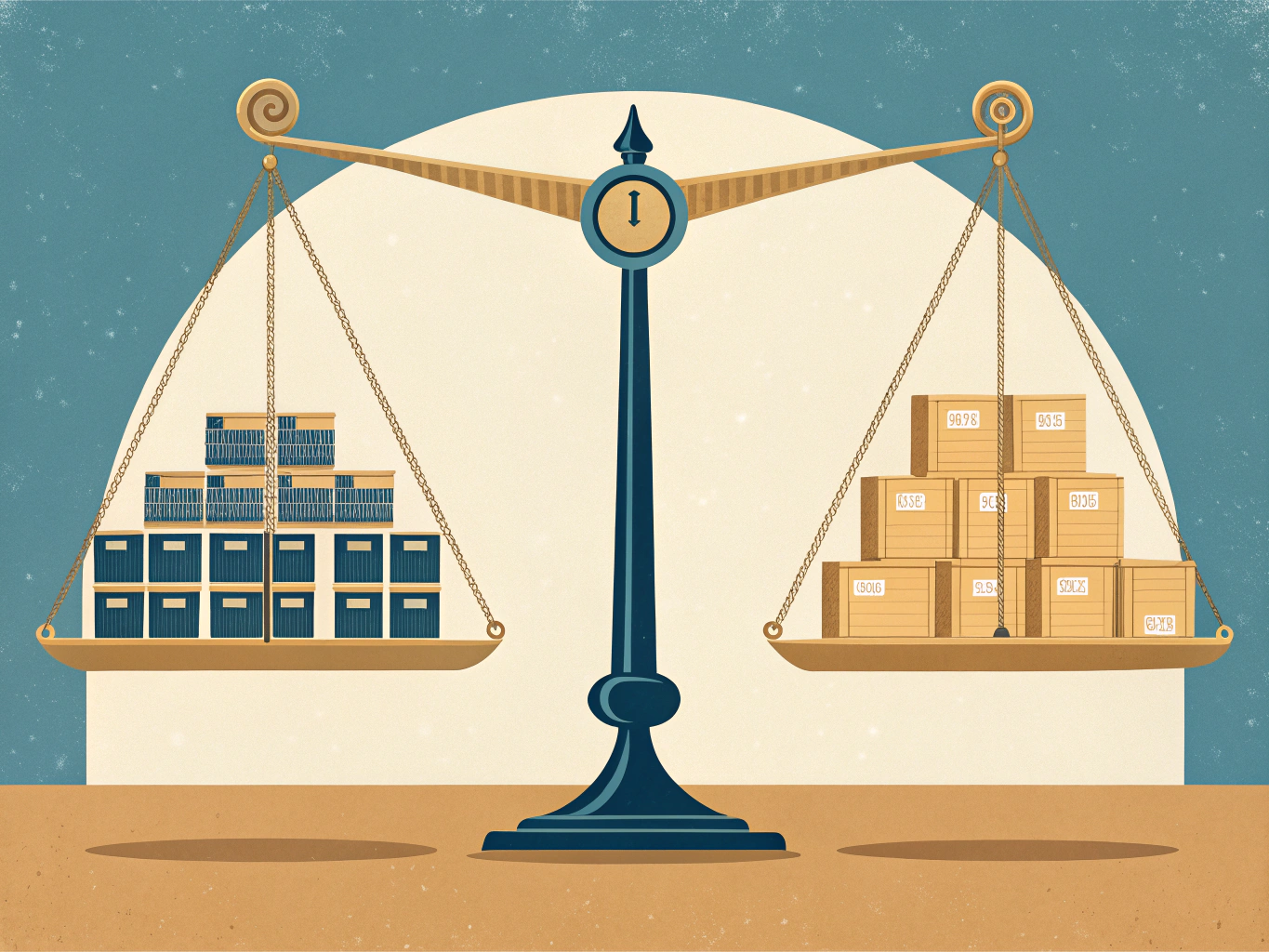
The transition from guesswork to data-driven inventory management isn't just about cutting costs; it's about reclaiming control over one of your biggest operational variables.
Benefit 3: Proactive Risk Management and Disruption Prevention
The difference between supply chain success and costly disruption often comes down to timing. Traditional risk management waits for problems to materialize, then scrambles to respond. Predictive analytics flips that script entirely.

By combining machine learning with real-time data streams, predictive analytics monitors global signals continuously, simulating scenarios to anticipate threats like port closures, extreme weather, or raw material shortages. Rather than discovering a problem when it hits your operations, you spot it forming on the horizon.
Consider a concrete example: real-time data can flag a weather-related delay at a key port, enabling rerouting before bottlenecks form. Your team acts immediately, adjusting shipment routes, activating backup suppliers, or securing alternative transportation. The disruption never reaches your customers.
This shift from reactive to proactive fundamentally changes your risk posture. Instead of managing crises after they occur, you're preventing them. The payoff is substantial: minimized delays that would otherwise cascade through your network, reduced emergency sourcing costs, and most importantly, protected customer relationships and reputation.
Organizations implementing predictive analytics report measurable confidence in their ability to navigate uncertainty. You're no longer hoping disruptions don't happen; you're equipped to see them coming and act decisively. That's control.
Benefit 4: Enhanced Operational Efficiency and Real-Time Visibility
Real-time visibility is where predictive analytics shifts from insight to command. When you can see your entire supply chain simultaneously, from procurement through last-mile delivery, you stop reacting to problems and start preventing them.
Here's the mechanism: predictive analytics integrates enterprise and external data to deliver real-time insights and actionable recommendations. RTS Labs The technology pulls continuous feeds from IoT sensors, GPS trackers, and smart devices embedded throughout your operations. This isn't data for data's sake; it's intelligence flowing in real time, updating your decision-making every second.
The numbers validate this approach. Over 70% of leading manufacturing firms have deployed real-time monitoring systems, achieving production downtime reductions of up to 35%. Coherent Market Insights 2024 That's not incremental improvement; that's operational transformation.
What does this visibility actually do for you? Real-time monitoring enables rapid decision-making when transit delays threaten schedules. You identify supplier risks before they cascade into production halts. You optimize resource allocation because you know where inventory sits and where bottlenecks form. Transport costs drop because you're routing shipments intelligently, not guessing. Delivery performance improves because delays get caught early, not discovered after the fact.
The competitive edge is tangible. While competitors manage exceptions after they occur, your team controls operations as they unfold. You're not just more efficient; you're fundamentally more responsive to market demands and disruptions. That's the power of seeing everything, understanding everything, and acting on everything in real time.
Benefit 5: Strategic Competitive Advantage and Data-Driven Decision Making
In today's hypercompetitive market, supply chain excellence is no longer a back-office function; it's a strategic weapon. Predictive analytics transforms your supply chain from a cost center into a competitive asset that drives tangible business advantage.
Organizations that embrace unified data models and predictive analytics can navigate disruption with agility and unlock efficiencies fueling growth, according to EY research. The difference is measurable. Early adopters of predictive analytics reported 18% operational cost reduction in 2025, but more importantly, they gained the ability to capitalize on market opportunities their competitors missed.
Think of your AI platform as the modern supply chain's control tower, collating, coordinating, and conducting decisions and actions across your entire network, as IBM describes it. This centralized intelligence enables you to respond to demand shifts in days instead of weeks, accelerate time-to-market for new products, and identify margin-boosting opportunities hidden in your data.
The real competitive edge comes from speed and insight. When your competitors are still analyzing yesterday's problems, you're already positioning inventory for tomorrow's demand. When they react to supply disruptions, you've already rerouted shipments. When they estimate profitability, you're optimizing it in real time.

For 2026, the question isn't whether predictive analytics delivers value. It's whether you can afford to compete without it.
FAQ: Common Questions About Predictive Analytics in Supply Chain
Q: What data quality is required for predictive analytics to work effectively?
You don't need perfect data to start, but you do need clean data. Strong forecasting depends on clean, complete, and consistent data quality; poor data inputs weaken outcomes. Most organizations spend 2-3 weeks auditing their data sources before implementation. Focus on your highest-impact data first: demand history, inventory levels, and supplier performance. You can clean and enrich secondary data sources as you progress.
Q: How long does implementation typically take?
Expect 3-6 months for a pilot program targeting one area like demand forecasting or inventory optimization. Full enterprise deployment takes 9-12 months. The timeline depends on your data readiness and system integration complexity. Quick wins appear within the first 60-90 days, which builds internal momentum and justifies continued investment.
Q: What's the ROI timeline for predictive analytics investments?
Early adopters reported 18% operational cost reduction, providing clear ROI within the first year of implementation. Most organizations see measurable improvements in forecast accuracy within 90 days and financial returns within 6-9 months. Your ROI depends on where you apply the technology; demand forecasting and safety stock optimization typically deliver faster returns than longer-term strategic projects.
Q: Can predictive analytics integrate with our legacy systems?
Yes. Most solutions use API connections or data warehouse approaches that sit on top of existing systems. You won't need to rip and replace your ERP or WMS. Integration complexity varies, but experienced implementation partners handle this routinely.
Q: Do we need a large team of data scientists?
No. You need one data professional to manage models and one business analyst to interpret results. Most of the heavy lifting happens through managed platforms that don't require advanced coding. Your supply chain expertise matters more than deep technical skills.
Q: How does predictive analytics handle unexpected disruptions?
Modern platforms flag anomalies and adapt to new patterns. They won't predict earthquakes, but they'll catch supplier disruptions, demand spikes, and seasonal shifts faster than spreadsheets ever could. Combine analytics with scenario planning for true resilience.
Implementation Considerations and Best Practices
Getting predictive analytics right starts with honest assessment of your current state. Before selecting tools or hiring data scientists, clarify what you're actually trying to solve. Are you fighting demand forecast errors? Preventing stockouts? Reducing excess inventory? Your business objectives should drive every implementation decision.
Data quality is non-negotiable. Strong forecasting depends on clean, complete, and consistent data quality; teams must standardize supply chain data and validate sources. Appoint a data steward to own this responsibility, invest in data validation tools, and implement persistent monitoring. Garbage in equals garbage out, no exceptions.
Next, evaluate your tech stack carefully. Your platform must integrate seamlessly with existing ERP, WMS, and logistics systems. Integration friction kills adoption faster than complexity. Test extensively before full rollout.
Build a cross-functional team combining supply chain domain expertise with analytical capability. Your supply chain managers understand the business constraints; your data professionals understand what's possible. Neither group alone will succeed.
Finally, embrace iteration. Your first predictive model won't be perfect, and your business needs will shift. Plan for continuous refinement and regular strategy reviews. Allocate budget and resources for ongoing model improvement, not just initial implementation.
The organizations winning with predictive analytics aren't those with the fanciest tools. They're the ones who got the fundamentals right: clear objectives, clean data, aligned teams, and realistic timelines.
Key Takeaways: Moving From Reactive to Proactive Supply Chain Management
The shift from reactive firefighting to proactive supply chain management isn't optional anymore; it's competitive necessity.
Here's what the data tells us: predictive analytics cuts demand forecast errors by 20-50%, transforming inventory from a cost burden into a precision instrument. You stop guessing. You start knowing.
Risk management becomes prevention rather than damage control. Supply chain disruptions cascade fast. Predictive models catch problems weeks before they hit your operations, giving you time to reroute, restock, or renegotiate instead of scrambling at midnight.
Real-time visibility drives 18-35% operational cost reductions. Fewer expedited shipments. Smarter warehouse allocation. Faster decisions because your data moves at business speed, not quarterly review cycles.
The market is accelerating. Early adopters are already pulling ahead in customer satisfaction, margin protection, and supply chain resilience. Waiting another year means playing catch-up against competitors who've already embedded these capabilities.
Implementation requires discipline around data quality, but the ROI timeline is realistic: most organizations see measurable returns within twelve months. Start with your highest-impact forecast category or your most volatile supplier relationship. Build momentum. Scale systematically.
The question isn't whether to adopt predictive analytics. It's how quickly you can move from reactive survival to proactive advantage.
Conclusion: The Strategic Imperative for Enterprise Predictive Analytics
The window for competitive advantage in supply chain management is narrowing. Supply chain disruptions are no longer occasional shocks; they're the operational reality. Organizations that cling to fragmented data and analog processes risk being outpaced by competitors who wield real-time insights with precision, according to EY research on predictive analytics in supply chain.
The five benefits we've covered, demand forecasting accuracy, inventory optimization, risk mitigation, cost reduction, and enhanced supplier collaboration, don't exist in isolation. They compound. Together, they transform your supply chain from a cost center defending against disruption into a strategic growth engine that anticipates market shifts and capitalizes on them.
Here's what matters most: the technology is mature and proven. This isn't experimental. Enterprises across industries are already deploying predictive analytics at scale, and the market is growing at 16-28% annually. Early adopters aren't just gaining operational advantages; they're building structural competitive moats that late entrants will struggle to overcome.
The question isn't whether to invest in predictive analytics. It's whether you can afford to wait.
Your next move is straightforward. Audit your current data capabilities and infrastructure. Identify one or two quick-win use cases, perhaps demand forecasting or safety stock optimization, where you can demonstrate immediate ROI. Build internal confidence and stakeholder buy-in through early wins. Then scale systematically across your operation.
The enterprises winning in 2026 won't be those with the most data. They'll be those who turned data into foresight, and foresight into action. Start your journey now.
Keep reading

Critical Third Parties: UK Cloud Rule Explained
A Critical Third Party is a provider whose service failure could threaten UK financial stability. The first UK designations are four cloud providers.

Netflix Earnings Put Always-On TV in Focus
Netflix reports Q2 results July 16 after reports it is weighing always-on channels. Arkolith maps NFLX to $284.0B in tracked 13F value.

UK Cloud Watchlist Maps to $4.45T in 13F Value
The UK's first cloud oversight list maps to Microsoft, Alphabet, Amazon and Oracle, which Arkolith tracks across $4.45T of Q1 2026 13F value.