Real-Time Routing Optimization: Everything You Need to Know
Last Updated: February 20, 2026
Key Takeaways
- Real-time routing optimization reduces transportation costs by 25-40% and improves delivery times by 20-30%
- AI and machine learning continuously adapt routes based on live traffic, weather, and operational changes
- Effective implementation requires unified data integration from GPS, telematics, traffic APIs, and order systems
- Businesses report 28% more stops per day, 24% cost reduction, and 95% customer satisfaction improvements
- Future systems will incorporate predictive analytics, autonomous vehicles, and sustainability metrics
What Is Real-Time Routing Optimization?
Real-time routing optimization is a software-driven process that continuously calculates and recalculates delivery routes based on live operational data, including traffic conditions, vehicle location, weather, and order priorities. Unlike static routing, which relies on manually planned routes fixed hours or days in advance, real-time optimization adapts instantly as conditions change.
This distinction matters enormously in 2026. With over 4,000 parcels shipped every second across major markets, the old approach of predefined routes has become a competitive liability. A traffic incident, weather disruption, or surge in orders can cascade into missed delivery windows, frustrated customers, and wasted operational costs. Real-time systems eliminate that friction by making thousands of micro-adjustments throughout the day.
The business case is straightforward: better routes mean lower fuel consumption, fewer failed delivery attempts, reduced overtime, and faster average delivery times. Your competitors already know this. E-commerce growth and rising customer expectations for same-day or next-day delivery have made optimization no longer optional; it's foundational to operational efficiency.
What powers these systems is big data. Modern routing software ingests vehicle telemetry, historical travel patterns, real-time traffic feeds, and weather data to create a constantly evolving picture of your network. The result is routes that work in the real world, not just on paper.
The question isn't whether you need real-time routing optimization. It's whether you can afford to delay implementation while your operational costs remain unnecessarily high.
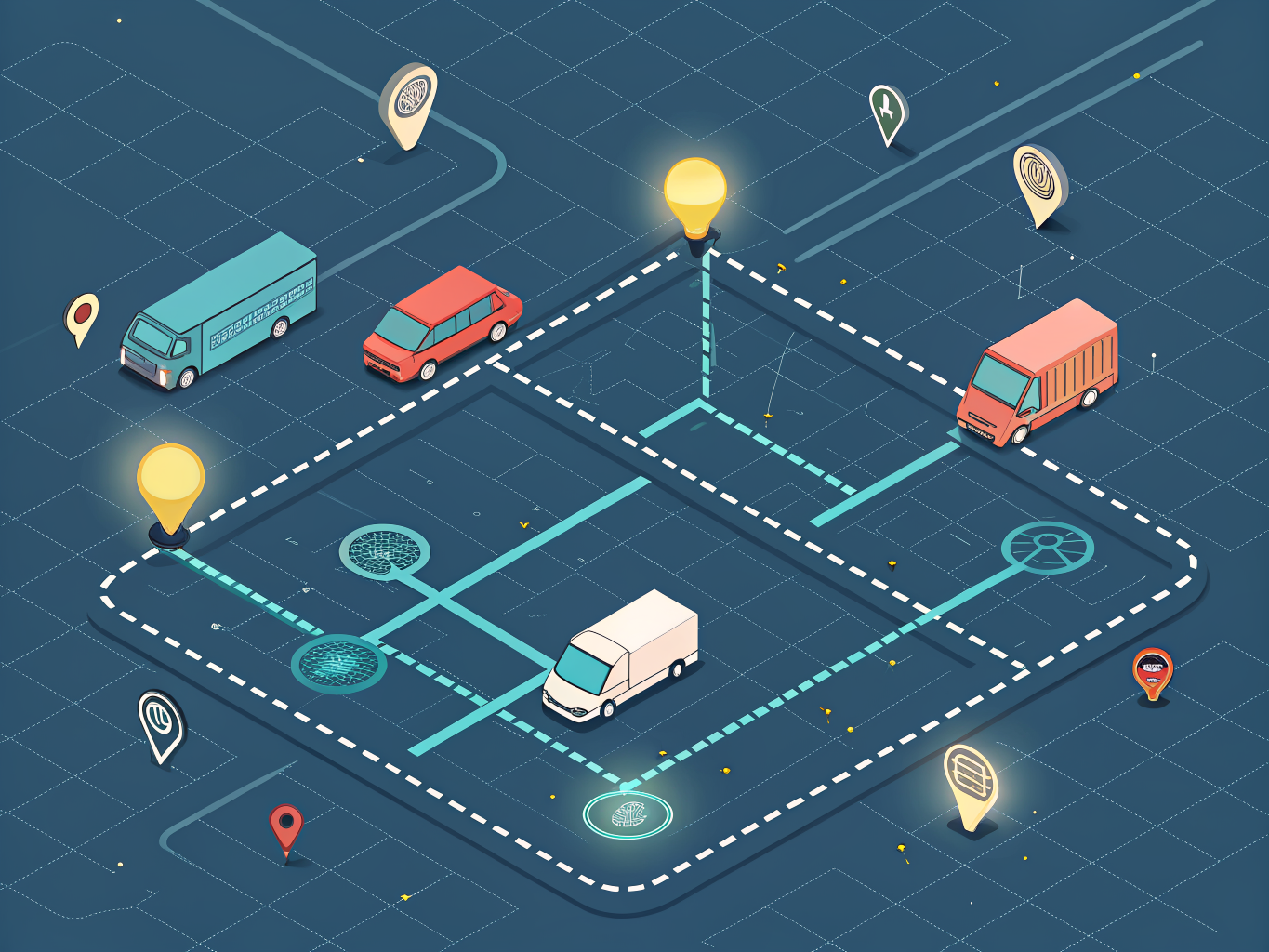
How Real-Time Routing Optimization Works
Real-time routing optimization operates through three integrated stages: gathering real-time inputs, processing those inputs through optimization algorithms, and executing route changes across your fleet.
Think of it like an air traffic control system for your delivery operations. Just as controllers monitor dozens of planes simultaneously and adjust flight paths based on weather and congestion, routing systems continuously ingest live data and recalculate optimal paths.
The data collection phase pulls information from multiple sources. GPS telemetry from your vehicles provides precise location data; traffic APIs feed in congestion patterns; weather services highlight conditions that affect delivery times; your order management system supplies pickup and delivery details; and vehicle constraints like capacity limits and driver hours restrictions establish operational boundaries. This creates a real-time picture of your entire operation.
The system then processes these inputs through optimization algorithms that solve variations of classic logistics problems: the Vehicle Routing Problem and Traveling Salesman Problem. Rather than evaluating every possible route combination (which would take forever), these algorithms use mathematical shortcuts to find near-optimal solutions in seconds.
Machine learning adds another layer. By analyzing historical delivery data, the system predicts accurate ETAs and identifies patterns, continuously learning which routes perform best under specific conditions. A route that works well on Tuesday mornings might perform poorly during Friday rush hour; the system adapts to these nuances automatically.
The execution phase translates calculations into action. Route updates push to driver apps, automatically reassigning stops when conditions change significantly.
Here's the critical point: because these variables change constantly and interact at scale, dynamic route optimization cannot be executed manually; it requires automated algorithms and real-time data processing to function effectively. Your dispatcher simply cannot recalculate optimal routes for 50 vehicles across 1,000 stops while traffic conditions shift by the minute. Automation isn't optional; it's essential.
Key Benefits and Business Impact
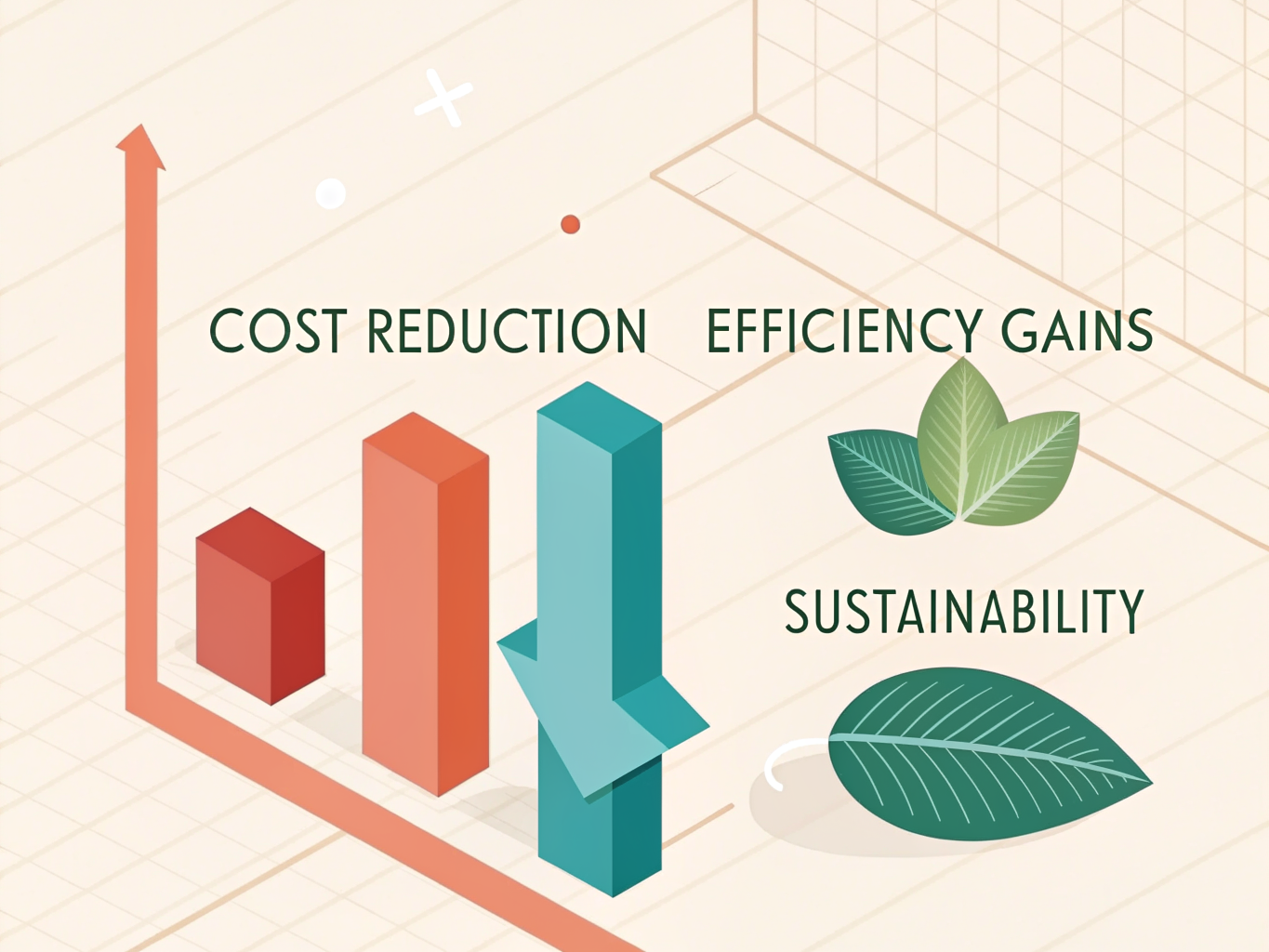
The financial case for real-time routing optimization is compelling and measurable. Organizations implementing dynamic route optimization report cost reductions of 25-40% across their supply chain operations, with transportation expenses specifically dropping by 20-30%. For a fleet of 50 vehicles, this translates to approximately $605,000 in annual savings and a 909% return on investment in the first year alone.
Beyond cost, the efficiency gains are equally striking. Fleets report 28% more stops per day while simultaneously reducing delivery time by 20% without hiring additional drivers. This means you're extracting more value from existing resources, a critical advantage when driver recruitment remains challenging across industries.
Customer satisfaction metrics validate the operational improvements. Organizations achieve 95% satisfaction rates by providing accurate ETAs and consistent on-time delivery. This reliability builds customer loyalty and reduces churn, creating revenue stability that extends far beyond the logistics function.
The sustainability angle carries increasing weight with stakeholders and regulators. Real-time optimization delivers 30-45% CO2 emission reductions and 35% fuel consumption decreases per delivery. These aren't vanity metrics; they directly lower your carbon footprint while meeting ESG commitments that investors and customers now demand.
Perhaps most overlooked is the operational excellence benefit. Reduced empty miles, better asset utilization, and improved driver retention follow naturally when routes are intelligent and fair. Your team experiences less frustration, fewer inefficient assignments, and greater job satisfaction.
Core Technologies and Data Sources
Real-time routing optimization lives and dies by data quality. Your system needs inputs from multiple sources working in concert, and understanding these dependencies is crucial before implementation.
Start with GPS telemetry. Every vehicle transmits location, speed, and direction continuously. This isn't just about knowing where drivers are; it's about capturing actual travel times that feed back into your optimization engine. Historical GPS data reveals traffic patterns; real-time data keeps routes responsive.
Traffic APIs are non-negotiable. Route optimization systems require live information from GPS tracking, traffic APIs, weather services, and your order management system. These services provide congestion levels, accidents, road closures, and construction delays. Without them, your optimized routes become obsolete within minutes during peak hours.
Weather integration matters more than many realize. Rain, snow, and ice don't just slow vehicles; they change road capacity and safety constraints. Forecasts help anticipate problems before they materialize.
Your order management system must feed new orders, cancellations, and modifications to the routing engine instantly. Delays here create cascading inefficiencies. Similarly, vehicle constraints require constant monitoring: current load, fuel or charge levels, weight distribution, and vehicle type restrictions all influence what's actually possible.
Driver data completes the picture. Availability, certifications, hours-of-service regulations, and required break times aren't optional considerations; they're legal and operational requirements. Sophisticated systems evaluate 18+ cost variables and multiple real-life constraints simultaneously, balancing fuel costs, labor hours, vehicle depreciation, and delivery time windows.
Integration complexity is real. At minimum you need access to task order data, available resources, operational data, and road intelligence. Most enterprises find that data standardization and API connectivity are their biggest implementation challenges, not the optimization algorithms themselves.
Implementation Challenges and Success Factors
Implementing real-time routing optimization sounds straightforward until you confront the messy reality of enterprise systems. The biggest hurdle isn't the technology itself; it's the data feeding it. Effective real-time route optimization depends entirely on the quality and timeliness of underlying data. If your GPS data lags, traffic feeds are stale, or inventory records don't sync across systems, your optimization engine becomes unreliable fast.
Integration complexity compounds this challenge. Most enterprises run legacy systems that weren't designed to share information in real time. You'll need API-based connections and continuous data synchronization across all platforms to break down these silos. Incremental computation beats periodic batch recalculation; processing updates as they arrive rather than waiting for nightly runs keeps your routes current.
Beyond the technical side, success requires organizational alignment. Your drivers, dispatchers, and planners need training and buy-in. A pilot program in one region or vehicle fleet lets you work through operational friction before full rollout. Exception management matters too. Your system must detect anomalies immediately—a traffic incident, equipment failure, or customer cancellation—and trigger rapid response, whether automated or human-driven.
Success requires the ability to unify fresh, trustworthy data from disparate sources; ensure incremental and correct computation of decision-critical insights; and seamlessly orchestrate automated action and rapid human response. A successful real-time route optimization strategy extends beyond calculating optimal routes; it must ensure that calculation outputs are acted upon immediately, and that action results feed back into the system for further optimization.
Complexity is real, but it's manageable with clear priorities and measured implementation.
Industry Applications and Use Cases
Real-time routing optimization solves fundamentally different problems across industries, each with measurable financial impact.
In logistics and supply chain, the gains are obvious. Last-mile delivery costs represent 50% of total shipping expenses for many carriers. Real-time optimization reduces empty miles, consolidates stops, and adapts instantly when traffic patterns shift or customer requests change mid-route. Multi-depot operations become genuinely manageable, with the system balancing load across facilities while respecting delivery windows and vehicle constraints.
Healthcare logistics presents unique complexity. Temperature-controlled vaccine distribution requires routing that maintains cold chain integrity while meeting tight delivery schedules. AI route optimization dynamically adjusts routes to prioritize the quickest yet compliant paths for critical medical supplies like vaccines, ensuring both timely delivery and temperature integrity. A specialty pharmaceuticals distributor can flag exceptions and propose alternative routing when temperature risk emerges, preventing costly product loss.
Emergency services and national security applications demand speed over cost optimization. Real-time routing coordinates first responders during disasters, prioritizes critical infrastructure protection, and allocates resources based on actual conditions rather than pre-planned assumptions. The system identifies fastest paths for emergency services while accounting for road closures and capacity constraints.
Energy and utilities sectors use optimization for field service scheduling and maintenance routing across dispersed assets. Technicians arrive on-site faster; equipment failures receive faster response. DHL achieved 90-95% accuracy in predicting arrival times since integrating AI into its Resilience360 platform in 2019, demonstrating how enterprise adoption translates to operational reliability.
Municipal smart cities apply optimization to traffic management and public transportation efficiency. Financial compliance teams benefit from audit trails and regulatory reporting capabilities embedded in routing systems.
The pattern is consistent: organizations that implement real-time optimization reduce operational costs while improving service levels. The competitive advantage compounds when competitors still rely on static planning.
Future Trends and Emerging Technologies
Real-time routing optimization isn't standing still, and neither should your strategy for implementing it.
The next wave of capability centers on prediction rather than reaction. Tomorrow's AI-driven routing systems will go beyond reacting to current conditions, instead predicting them by analyzing historical data, live traffic feeds, and order trends to anticipate future congestion and demand surges. This shift from responsive to proactive means fewer surprises and tighter margins.
Fleet composition is changing too. As autonomous delivery vehicles and driver-assist systems become mainstream, dynamic route optimization will play a key role in orchestrating mixed fleets combining human-driven and self-driving assets. Your routing system will need to handle this complexity seamlessly, assigning tasks based on vehicle capabilities, not just availability.
Sustainability is moving from corporate messaging to operational reality. Future routing systems will incorporate carbon footprint data, fuel efficiency metrics, and alternative energy options into their algorithms, helping companies align with green logistics initiatives and meet ESG targets. Expect regulators and customers to demand this transparency increasingly.
Behind the scenes, deeper integration is happening. Integrating telematics systems with dispatch software will provide deeper insights into vehicle health, driver behavior, and fuel consumption, further enhancing fleet management. Combined with IoT monitoring and blockchain for supply chain transparency, you'll gain end-to-end visibility that today's systems barely touch.
The competitive advantage isn't in adopting each trend individually. It's in building infrastructure flexible enough to absorb these changes without complete overhauls. Start evaluating your current system's scalability now.
FAQ: Common Questions About Real-Time Routing Optimization
How long does implementation take? You'll see initial gains within 1-3 months, with full benefits realized by month 3-6. Implementation timeline typically follows a phased approach: data integration, system configuration, then driver onboarding. Most enterprises achieve operational excellence by month 6-12.
What's the actual ROI? Average ROI reaches 909% in the first year, with a 50-vehicle fleet typically seeing $605,000 in savings. These gains come from reduced miles, faster deliveries, and lower fuel costs. The math is straightforward; your mileage savings alone justify the investment.
Can't we just use Google Maps? Not for serious operations. Consumer tools like Google Maps lack capability for unlimited optimized routes with unlimited stops over vast distances. They're designed for personal navigation, not fleet-scale constraint handling. Professional platforms manage vehicle capacity, time windows, driver regulations, and dynamic traffic simultaneously.
How much data integration is needed? Multiple sources, but modern APIs simplify this. Mapping, traffic, and GIS data can be obtained via public or private APIs, and most modern TMS systems integrate seamlessly. Your existing infrastructure becomes the foundation, not a barrier.
Will drivers resist the change? Pilot programs and proper training overcome adoption challenges. Drivers often embrace systems that reduce frustration and improve their day. Frame it as a tool that supports them, not monitors them.
Does it work with our current TMS? Yes. API-based integration connects with virtually all modern platforms, protecting your existing technology investments.
Key Takeaways: Implementing Real-Time Routing Optimization
Here's your implementation roadmap. Begin by identifying your biggest operational pain points: is it fuel costs, delivery delays, or customer satisfaction? Your answer shapes everything that follows.
Next, audit your current setup. Do your systems talk to each other? Can you access real-time GPS data, traffic feeds, and order information simultaneously? Choose route optimization software that supports API-based integration and real-time data syncing across all platforms to ensure every decision reflects your latest operational reality.
Run a pilot before going enterprise-wide. Test with 10-15% of your fleet on a specific route or region. This approach reduces risk and gives you concrete numbers to justify broader investment.
Invest in your team. Software only works when people use it correctly. The best approach includes hands-on training and highlighting early wins such as reduced travel time or improved delivery accuracy.
Track these metrics religiously: cost per delivery, fuel consumption, on-time performance, and customer satisfaction. These numbers tell you whether optimization is actually working.
Finally, think ahead. Select platforms that evolve with technology, including autonomous vehicle capabilities. Real-time routing optimization isn't a one-time implementation; it's a continuous improvement engine that gets smarter as it processes more data.
Conclusion: Why Real-Time Routing Optimization Matters Now
Real-time routing optimization has crossed a critical threshold. It's no longer the competitive advantage that separates industry leaders from the rest; it's the competitive necessity that determines who survives margin compression and rising customer expectations.
Your customers demand faster delivery and accurate ETAs. Your finance team needs to justify every fuel dollar spent. Your sustainability commitments require measurable emissions reductions. Real-time routing addresses all three simultaneously. By using advanced algorithms and real-time data, businesses see significant improvements in efficiency, cost savings, and environmental impact.
The barriers to entry have collapsed. Technology maturity means you're not betting on unproven concepts anymore. Vendor options span from enterprise platforms to scalable cloud solutions, making implementation accessible whether you operate 50 vehicles or 5,000.
The calculus is straightforward: early movers capture outsized advantages before the market saturates. Those who wait another year will be playing catch-up against competitors who've already optimized their operations, trained their teams, and locked in cost savings.
The question isn't whether to implement real-time routing optimization. It's whether you can afford to wait. Start by auditing your current routing processes, identifying your biggest pain points, and evaluating solutions that match your scale and complexity. The competitive window is open now.
Keep reading

Critical Third Parties: UK Cloud Rule Explained
A Critical Third Party is a provider whose service failure could threaten UK financial stability. The first UK designations are four cloud providers.

Netflix Earnings Put Always-On TV in Focus
Netflix reports Q2 results July 16 after reports it is weighing always-on channels. Arkolith maps NFLX to $284.0B in tracked 13F value.

UK Cloud Watchlist Maps to $4.45T in 13F Value
The UK's first cloud oversight list maps to Microsoft, Alphabet, Amazon and Oracle, which Arkolith tracks across $4.45T of Q1 2026 13F value.