Smart City Big Data Analytics: Ultimate Guide to Urban Intelligence
Last Updated: March 13, 2026
Key Takeaways
- Smart city big data analytics shifts infrastructure management from reactive to predictive, reducing costs by 40%
- IoT sensors, AI, and machine learning detect problems 30-90 days earlier than traditional methods
- Predictive maintenance prevents 70-85% of emergency infrastructure failures through continuous monitoring
- Real-time data analytics enable better decision-making across transportation, energy, water, and public safety systems
- Successful implementation requires integrated data platforms, skilled personnel, and organizational change management
What Is Smart City Big Data Analytics?
Smart city big data analytics represents a fundamental shift in how urban environments operate. It combines IoT sensors, artificial intelligence, machine learning, and advanced analytics to transform raw data into actionable intelligence that drives real decisions, not guesses.
Here's what separates this from traditional approaches: where cities once reacted to problems after they occurred, smart city analytics enables prediction and prevention. A pothole gets fixed before it becomes a safety hazard. Traffic congestion gets managed before gridlock happens. Energy consumption gets optimized in real-time rather than analyzed in monthly reports.
A smart city is defined as an urban environment where public issues are addressed via ICT-based solutions on the basis of municipality and multi-stakeholder based partnership. This multi-stakeholder approach matters because cities aren't monoliths. Municipal planners, infrastructure operators, energy managers, transportation authorities, and security teams all need the same data insights to coordinate effectively.
Big data analytics functions as the critical enabler for data-driven decision making in smart cities, where cities' actual intelligence depends on information systems that collect diverse digital data and convert it into insights. Without analytics, you have sensors generating noise. With it, you have actionable signals.
The business case is straightforward: better decisions reduce operational costs, improve service delivery, and enhance citizen satisfaction. For enterprise stakeholders managing city infrastructure, this means measurable ROI through efficiency gains and risk mitigation. Smart city big data analytics isn't theoretical; it's the operational backbone of modern urban management.
Core Applications Across Urban Infrastructure
Big data analytics transforms five critical infrastructure domains from reactive problem-solving to predictive management, delivering measurable operational gains and cost savings.
Transportation systems leverage traffic pattern analysis to reduce congestion and optimize public transit routes in real-time. By detecting mobility hotspots, cities reroute vehicles before bottlenecks form, cutting commute times and fuel consumption simultaneously. This directly impacts supply chain efficiency for logistics operators and reduces municipal spending on infrastructure expansion.
Energy management sees immediate returns through smart grid optimization and consumption forecasting. Analytics balance real-time demand with renewable energy integration, preventing blackouts while lowering operational costs. Utilities gain visibility into peak usage patterns, enabling better resource allocation and faster response to grid failures before they cascade.
Water utilities deploy leak detection and pressure monitoring systems that catch pipe failures before catastrophic breaks occur. Predictive analytics identify which sections need maintenance, shifting budgets from emergency repairs to planned replacements. This approach cuts water loss by 15-30% and extends infrastructure lifespan, directly improving municipal bottom lines.
Public safety applications use crime forecasting and incident prediction to position resources where they're needed most. Rather than patrolling randomly, departments respond to data-backed probability zones, improving response times and community safety metrics. Emergency response optimization ensures faster incident resolution and better resource utilization.
Governance tracks policy implementation effectiveness and optimizes resource allocation across departments. Analytics reveal which programs deliver genuine citizen engagement and which waste budget, enabling data-driven budget decisions and accountability.

Predictive Analytics and Maintenance: The Game Changer
Your city's infrastructure is breaking down, and you're paying the price. Every unexpected failure, every emergency dispatch, every reactive repair that could have been prevented eats into budgets and disrupts services. The shift from reactive break-fix maintenance to predictive, condition-based strategies isn't just an operational upgrade; it's a financial imperative.
Here's the reality: traditional maintenance responds to problems after they occur. Your teams react to failures, deploy expensive emergency crews, and deal with cascading service interruptions. Predictive analytics flips this entirely. By deploying IoT sensors across your infrastructure, you collect real-time data on vibration, temperature, pressure, and acoustic signals. Machine learning algorithms analyze these streams continuously, identifying degradation patterns and predicting failures 30 to 90 days in advance, giving you time to act strategically.
The business case is compelling. Cities implementing predictive maintenance see up to 40% reductions in maintenance costs through optimized repair scheduling and smarter resource allocation. More dramatically, smart city IoT systems reduce emergency infrastructure failures by 70 to 85% through predictive monitoring and automated diagnostics. That's not just cost savings; that's operational resilience.
Real cities are proving this works. Singapore's public transit system uses predictive analytics to optimize rail maintenance schedules. Barcelona's water infrastructure leverages sensor networks to detect pipe degradation before catastrophic breaks occur. Chicago's energy providers predict equipment failures across their grid, preventing blackouts and extending asset lifecycles.
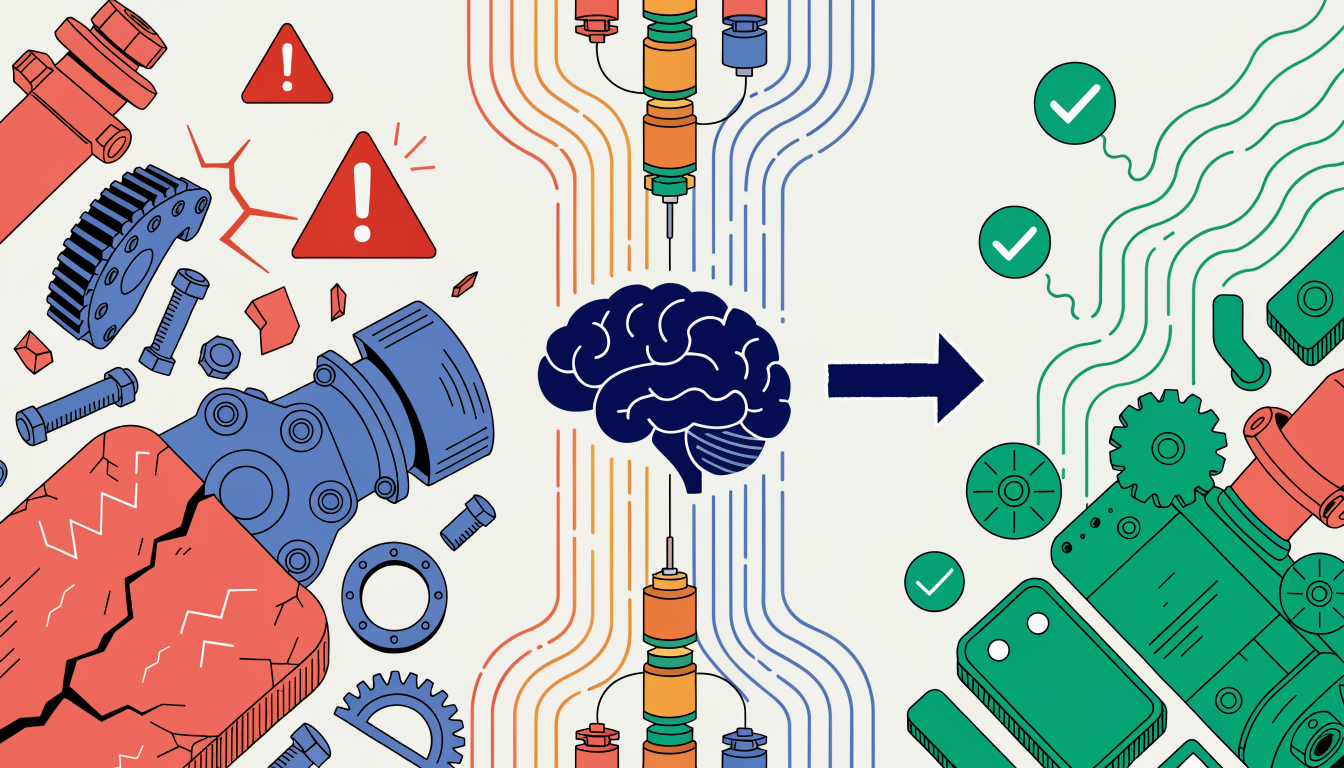
The infrastructure managers winning today aren't waiting for failures. They're investing in IoT sensors, AI-powered analytics, and machine learning to stay ahead. Your question isn't whether to adopt predictive maintenance; it's how quickly you can implement it.
Technologies Powering Smart City Analytics
Smart city infrastructure generates staggering data volumes daily. Managing and extracting actionable intelligence from this deluge requires a sophisticated technical foundation that your IT team needs to understand.
The backbone starts with distributed IoT sensor networks monitoring everything: vibration signatures in bridges, temperature fluctuations in water systems, acoustic patterns indicating equipment stress, and environmental readings across urban zones. These sensors continuously stream data that must reach processing systems reliably and securely.
Data transmission architecture is critical here. High-speed networks (5G, fiber optic backhaul) deliver massive data flows in real-time while maintaining encryption and authentication protocols that satisfy your security requirements. This isn't optional; data breaches in city infrastructure systems create cascading operational failures.
Once data arrives, you face an integration challenge. Smart cities typically operate legacy systems alongside modern platforms. Smart city data management platforms unify IoT data to provide comprehensive operational view, with predictive analytics helping anticipate infrastructure maintenance needs and reduce downtime.
Here's where architecture decisions matter: cloud platforms provide scalable, flexible centralized storage for historical analysis and long-term trend detection. But edge computing brings processing closer to data sources, slashing latency for time-critical operations like traffic signal optimization or emergency response coordination. Most mature implementations use hybrid approaches, processing urgent decisions locally while routing non-time-sensitive data to cloud systems for deeper analytics.
Analytics platforms running machine learning models and real-time streaming algorithms sit atop this infrastructure, transforming raw sensor data into predictive insights that drive measurable operational improvements.
Overcoming Implementation Challenges
Smart city analytics projects often stumble not on vision, but on execution. The obstacles are real, and ignoring them guarantees failure.
Data silos represent the most immediate problem. Your city collects traffic data from one vendor, air quality sensors from another, utility systems run on decades-old infrastructure, and parking systems operate independently. Cities are able to understand the data being collected by one type of device, but that data also tends to be siloed, and cities can find even more insight by centralizing all data from multiple devices and legacy systems. The solution requires adopting unified data platforms with standardized APIs that translate between incompatible protocols, enabling legacy systems to communicate with modern IoT networks.
Data quality presents another persistent challenge. Missing values, inconsistent timestamps, and sensor drift undermine statistical validity. Rather than discarding incomplete datasets, implement intelligent imputation strategies and validation frameworks that flag questionable readings before analysis. This protects your ROI by ensuring decisions rest on trustworthy information.
Security and privacy concerns cut deeper than technical issues. Citizens rightfully expect their location and behavioral data to remain protected. Implement encryption standards appropriate to your data sensitivity levels, establish clear data governance policies, and ensure compliance with regulations like GDPR. This isn't bureaucratic overhead; it's foundational trust-building.
Organizational resistance often outlasts technical obstacles. Skills gaps mean your existing IT staff may lack analytics expertise. Address this through targeted training programs, hiring specialists, and establishing cross-departmental working groups that break down silos between planning, IT, and operations teams.

The cities moving forward aren't those without obstacles; they're the ones addressing them systematically.
Best Practices for Successful Smart City Analytics Implementation
Smart city analytics success hinges on three foundational moves: start narrow, govern rigorously, and build your team.
Begin with specific use cases, not broad ambitions. Pick one high-impact problem: traffic congestion, water main failures, or equipment downtime. Define measurable KPIs tied to business outcomes. Cities implementing comprehensive IoT strategies achieve 45-60% maintenance cost reductions while improving service reliability by 40-55% through intelligent monitoring and predictive intervention. That's your target.
Establish data governance before deploying sensors. You need frameworks covering data quality standards, security protocols, privacy safeguards, and regulatory compliance. This isn't bureaucratic overhead; it's your insurance policy. Poor governance creates liability, not insights.
Choose modular, scalable architecture. Avoid vendor lock-in. Build systems that let you add capabilities incrementally and swap tools without ripping everything out. This flexibility matters when technology evolves faster than your budget cycles.
Invest in people, not just platforms. Your analytics platform is worthless if operators don't trust it or IT can't maintain it. Allocate 20-30% of implementation budgets to training and change management. Create feedback loops between field technicians and data teams; they spot patterns analysts miss.
Engage stakeholders early and often. Include operations managers, IT security, field crews, and even citizen groups. Resistance kills more projects than technical complexity. When people shape the solution, they own the outcome.
Start with one critical asset or service line. Prove the ROI. Then scale.
The Future of Smart City Analytics
The convergence of autonomous inspection systems, digital twins, and prescriptive analytics is reshaping how cities operate. Rather than responding to problems after they occur, forward-thinking organizations now deploy predictive and prescriptive models that recommend specific interventions before failures happen. As cities continue their transition toward digitalization, predictive maintenance stands out as a cornerstone for building smarter, safer, and more sustainable urban environments. Predictive Maintenance for Smart City Infrastructure
The next frontier integrates IoT sensors, AI decision-making, blockchain verification, and edge computing into unified intelligent systems. This ecosystem doesn't just collect data; it acts on it in real time, reducing environmental impact while supporting climate commitments. Cities that lead this transformation gain measurable advantages: lower operational costs, improved service reliability, faster response times, and the credibility that comes from data-driven sustainability.

The question isn't whether smart city analytics will become essential infrastructure. It already is. The question is whether your organization will lead or follow. Begin your implementation today, starting with your highest-impact infrastructure challenges, and position yourself ahead of the competition.
Keep reading

Critical Third Parties: UK Cloud Rule Explained
A Critical Third Party is a provider whose service failure could threaten UK financial stability. The first UK designations are four cloud providers.

Netflix Earnings Put Always-On TV in Focus
Netflix reports Q2 results July 16 after reports it is weighing always-on channels. Arkolith maps NFLX to $284.0B in tracked 13F value.

UK Cloud Watchlist Maps to $4.45T in 13F Value
The UK's first cloud oversight list maps to Microsoft, Alphabet, Amazon and Oracle, which Arkolith tracks across $4.45T of Q1 2026 13F value.