Top Enterprise Data Analytics Platforms in 2026: Complete Buyer's Guide
Last Updated: March 24, 2026
Key Takeaways
- Enterprise analytics platforms unify fragmented data, enabling real-time decisions at organizational scale
- 2026 platforms prioritize AI-driven insights, multi-tenant architecture, and governance across distributed teams
- Supply chain analytics, predictive intelligence, and operational reporting are now table stakes for enterprises
- Selection depends on your data maturity, technical capacity, security requirements, and total cost of ownership
- Speed from data to decision is the new competitive metric, not dashboard aesthetics or feature lists
What Is an Enterprise Data Analytics Platform?
An enterprise data analytics platform is a centralized system that collects, integrates, manages, and analyzes data flowing across your entire organization. Unlike basic business intelligence tools that serve isolated departments, these platforms are built to handle the full scope of modern business: massive data volumes, multiple user types, real-time operations, and AI-driven automation all at once.
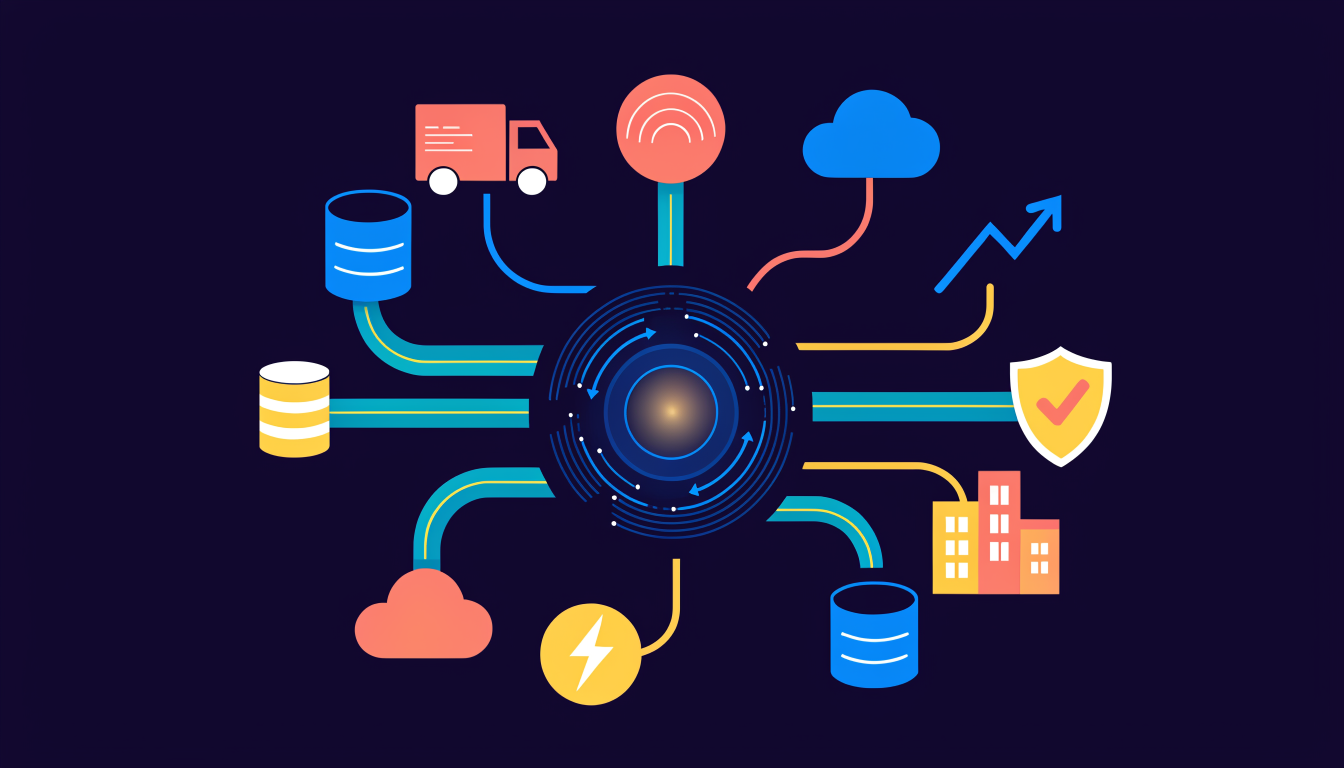
Think of it this way. You might have sales data in Salesforce, customer support metrics in Zendesk, operational logs in your data warehouse, and financial information scattered across spreadsheets. A basic analytics tool can show you one slice of this picture. An enterprise platform connects all of it, creating a unified foundation where data flows seamlessly and insights reach everyone who needs them.

The real power lies in how these platforms serve different audiences simultaneously. Your data engineers work with raw data pipelines and complex transformations. Your analysts build sophisticated models. Your executives pull instant dashboards on tablets. Non-technical managers ask questions in plain language. Modern platforms handle all of this through purpose-built interfaces, not forced workarounds.
Critically, governance and security aren't afterthoughts. They're embedded from the ground up, ensuring data stays protected while remaining accessible to those who need it. Scalability is built in too, growing with your organization without requiring architecture overhauls. This unified foundation transforms data from a liability (too much noise, too little signal) into operational intelligence that drives faster, smarter decisions across your business.
The Evolution of Enterprise Analytics: From BI Dashboards to AI-Powered Decision Intelligence
A decade ago, enterprise analytics meant one thing: wait for the IT team to build your dashboard. Business users sat in queues. Analysts spent weeks translating questions into SQL. Insights arrived too late to matter.
That world is disappearing.
Traditional BI platforms built everything into a single monolith. Compute, metadata, security, and storage all lived together. This worked fine when usage was light and predictable. But as adoption grew, the cracks appeared. One department's heavy workload would slow down another's critical report. Adding new data sources meant renegotiating the entire infrastructure. Speed became impossible; scalability became a negotiation.
Modern enterprise data analytics platforms have dismantled this architecture. They decouple compute from storage, metadata from security, analytics from infrastructure. Different teams now choose the compute engines that fit their workloads. A data scientist runs Python on Spark while a business analyst queries the same data through a no-code interface. No bottlenecks. No waiting.
But the real transformation isn't technical; it's cognitive. AI and conversational analytics have shifted power from analysts to everyone else. Instead of fifty people requesting reports from a central team, thousands of users ask natural language questions directly. The analyst becomes an architect of intelligence, not a bottleneck.
This shift has forced another change: multi-tenancy became essential. As enterprises embed analytics into customer-facing products and partner ecosystems, isolation and security can't be afterthoughts. Modern platforms handle this natively. They were built for it.
The competitive advantage today isn't about prettier dashboards or more metrics. It's about speed from data to decision. How fast can you spot the trend, understand why it happened, and act on it? In 2026, that speed defines your market position.
Agentic AI platforms now deliver role-specific intelligence tailored to how Finance, Sales, Marketing, and Operations actually work. A CFO gets cash flow forecasts; a sales leader gets pipeline predictions. Same data, different intelligence, delivered where it matters most.
If your current platform still feels like a reporting tool that requires analyst intervention, it's already behind. The question isn't whether to modernize. It's when.
Core Features That Define Enterprise-Grade Analytics Platforms
When evaluating enterprise data analytics platforms, certain capabilities separate the genuinely enterprise-ready solutions from those that merely claim to be. Understanding what these features actually do in practice helps you avoid costly mistakes.
Multi-tenancy architecture forms the foundation of any platform handling multiple business units or clients. This means different teams can access their own isolated data environments while maintaining consistent metric definitions across the entire organization. Without proper multi-tenancy, you either fragment your analytics into separate silos or compromise data security. A semantic governance layer sits above your data and acts as a single source of truth for how metrics are calculated and defined. When your finance team and marketing team both reference "revenue," they're using the exact same formula, not two competing interpretations. This eliminates the spreadsheet wars that waste countless hours.
AI and machine learning capabilities have moved from nice-to-have to essential. Look for natural language query interfaces that let business users ask questions without knowing SQL syntax. Automated anomaly detection flags unexpected patterns before they become problems. These aren't futuristic features anymore; they're baseline expectations for 2026.
Real-time or near-real-time data processing determines whether your analytics inform decisions or merely document them after the fact. If you're analyzing yesterday's data when competitors are acting on today's trends, your platform isn't serving its purpose.

Security and compliance infrastructure must include role-based access controls, data lineage tracking, and relevant certifications like SOC 2. Your auditors and regulators will demand proof that sensitive information is protected and tracked. Integration depth matters enormously; your platform needs to connect seamlessly with cloud data warehouses, ERP systems, and operational databases without constant custom development.
Pricing models deserve serious attention. Per-user pricing becomes expensive at scale; transparent pricing and capacity-based models enable confident expansion. As your organization grows, you don't want surprise costs blocking adoption.
Finally, low-code and no-code interfaces are non-negotiable. In 2026, platforms must serve engineers, analysts, and business users with intuitive interfaces and low-code or no-code options. Your technical teams will build sophisticated models; your business users need accessible tools to explore and act on insights without waiting for analyst availability.
Enterprise Data Analytics in Supply Chain: Predictive Intelligence in Action
Supply chains have always been about managing complexity, but most companies are still operating with yesterday's tools. Real-time visibility into demand, supplier health, and logistics performance isn't a luxury anymore; it's the difference between staying competitive and falling behind.
Modern enterprise analytics platforms transform supply chains by consolidating data from IoT sensors, supplier systems, customer orders, and logistics networks into a single coherent view. Instead of checking multiple dashboards and waiting for weekly reports, operations teams see disruptions as they happen. A weather delay at a port, a supplier running low on inventory, or a sudden demand spike registers instantly, triggering proactive responses before bottlenecks cascade through your network.
Predictive analytics takes this further. By analyzing historical patterns and real-time signals, these platforms forecast demand with remarkable accuracy, helping you right-size inventory rather than guessing. This directly impacts working capital; fewer overstock situations and stockouts mean cash flows more efficiently. Risk management becomes equally proactive. Early warning systems flag supplier financial distress, geopolitical threats, or operational vulnerabilities long before they disrupt operations.
The payoff shows up in OTIF metrics. On-time, in-full delivery improves when root causes of delays are identified and addressed systematically rather than reactively. Unified data models integrating IoT devices, sensors, and cloud platforms deliver a dynamic end-to-end picture of the supply chain, enabling what's often called a "control tower" approach. This consolidation across plants, suppliers, logistics providers, and customers shifts your supply chain from a cost center focused on minimization to a strategic asset capable of driving competitive advantage.
The transformation isn't about technology for its own sake. It's about making faster, smarter decisions with confidence.
How to Evaluate and Select the Right Platform for Your Organization
Selecting an enterprise analytics platform isn't about finding the most feature-rich option; it's about matching the right tool to your specific situation. The best choice depends on three interconnected factors: where your data lives, who will use it, and what problems you're actually trying to solve.
Begin by assessing your current data maturity. Are your data sources scattered across disconnected systems, or have you already invested in a centralized warehouse like BigQuery, Snowflake, or Redshift? If data is already centralized, look for platforms that operate natively on top of it to minimize data duplication. This architectural alignment saves time, reduces costs, and eliminates the complexity of moving data around.
Next, honestly evaluate your team's technical capacity. Do you have data engineers and analysts who can build custom pipelines and write SQL? Or do you need no-code or low-code solutions with automated data mapping and visualization? This distinction matters enormously. Pushing a non-technical team toward a complex platform wastes money and breeds frustration.

Security and compliance requirements are non-negotiable. Verify that any platform meets your industry standards: SOC2 certification, encryption in transit and at rest, detailed audit logging, and data residency options if you operate internationally. Don't treat this as an afterthought.
Finally, calculate total cost of ownership over three to five years, not just entry pricing. Watch for per-user seat scaling, data processing fees, and premium support costs that balloon as you grow. The cheapest platform today might become expensive tomorrow. Run a proof-of-concept with your actual data and use cases before committing. Speed from data to insight matters more than an exhaustive feature list; the right platform solves your problem efficiently.
Real-World Benefits: How Enterprise Analytics Drives Measurable Business Outcomes
Employees spend roughly 40% of their workweek wrestling with spreadsheets, data extraction, and manual report compilation. Modern enterprise analytics platforms reclaim an average of three hours per day, redirecting that effort toward strategic thinking and high-impact decisions. When your team stops chasing data and starts analyzing it, productivity compounds quickly.
The operational impact is equally concrete. Demand forecasting accuracy improves measurably when predictive models replace gut instinct, reducing inventory carrying costs while minimizing stockout risk. On-time, in-full (OTIF) delivery metrics strengthen when root cause analysis identifies bottlenecks hidden in siloed systems. What once took days of manual investigation now surfaces in minutes.
Risk management transforms from reactive firefighting into continuous vigilance. 24/7 monitoring of supplier health, cyber threats, and operational resilience means disruptions surface before they cascade. Compliance becomes simpler too; built-in governance, lineage tracking, and auditability reduce audit cycles and regulatory friction.
But perhaps the most decisive advantage is speed. Organizations that turn data into action faster than competitors gain genuine market agility. Customer satisfaction improves when you respond to market shifts before rivals do. That velocity compounds over quarters, creating separation that's hard to close.
FAQ: Common Questions About Enterprise Data Analytics Platforms
What's the difference between a traditional BI platform and a modern enterprise analytics platform?
Traditional BI platforms excel at creating polished dashboards and reports, but they often create bottlenecks where increased usage in one department affects performance for others. Modern enterprise analytics platforms decouple these layers, allowing you to scale without performance degradation. They also embed machine learning and predictive capabilities directly into the workflow, moving beyond "what happened" to "what comes next."
How long does implementation typically take?
Realistic timelines range from three to nine months, depending on your data complexity and organizational readiness. Careful planning including data assessment, team assembly, and tool selection based on scalability and integration makes the difference between smooth adoption and extended delays. Quick wins in the first 60 days build momentum and stakeholder confidence.
What about security and compliance?
Non-negotiable features include encryption in transit and at rest, SOC2 compliance, and dedicated tenant architectures. Leading platforms employ robust security measures and prevent unauthorized model training to protect sensitive information. Verify that your vendor's security posture aligns with your industry's regulations, whether that's HIPAA, GDPR, or SOX.
How much should we budget?
Pricing varies widely. Total cost of ownership includes per-user pricing, capacity-based models, usage-based pricing, and infrastructure costs. Most enterprise implementations range from $100K to $1M annually depending on scale. Request transparent pricing upfront; hidden costs emerge later with vague vendor contracts.
Do we need a large data science team?
Not necessarily. Modern platforms prioritize usability for business analysts and operational teams. You'll want at least one experienced data professional guiding architecture, but you don't need an army of PhDs.
Can we integrate with existing systems?
Yes. Quality platforms connect seamlessly with your current data warehouse, ERP, and CRM systems. Integration capability should be a baseline requirement, not a premium feature.
Key Takeaways: Making the Right Choice for Your Enterprise
Choosing an enterprise analytics platform isn't about finding the most feature-rich option; it's about matching the right tool to your organization's maturity, priorities, and constraints.
Start by assessing your current state honestly. Are your teams scattered across disconnected dashboards? Do you struggle to trust data consistency across departments? These pain points matter more than vendor feature lists. The platforms that win today unify fragmented data sources and compress the time between asking a question and acting on the answer. That speed from insight to action is your real competitive edge.
When evaluating options, treat multi-tenancy, semantic governance, and role-based security as baseline requirements, not differentiators. Every credible platform delivers these. Instead, focus on what actually moves your needle: Can the platform handle your data volume without exploding costs? Does it support the specific workflows your supply chain, finance, or operations teams need? Will it scale as your data grows without requiring a complete rearchitecture?
Be skeptical of AI and conversational analytics claims. These capabilities are becoming standard, but they only matter if they solve real problems in your business. Ask vendors for concrete examples tied to your industry, not generic demos.
Total cost of ownership outweighs entry pricing every time. Per-user licensing models can become prohibitively expensive as adoption grows. Evaluate the full picture: implementation costs, training, ongoing support, and infrastructure.
Finally, success depends on three things working together: honest assessment of your data maturity, realistic understanding of your team's capacity, and genuine executive commitment. The best platform fails without these foundations. Build your evaluation framework around your needs first, then find the vendor that fits.
Ready to Transform Your Enterprise Analytics? Discover How Arkolith Can Help
If your organization operates in supply chain, national security, energy, finance, or municipal services, you understand that analytical delays cost money, compromise safety, and erode competitive advantage. You need a platform built for environments where precision, speed, and security aren't negotiable.
Modern enterprise analytics platforms must do more than visualize data; they must unify it across your entire infrastructure while maintaining complete transparency about its lineage and movement. High-fidelity data tracking combined with visual pipeline builders gives your teams genuine control, not false confidence in black-box systems. Real-time analysis paired with predictive intelligence means decisions happen immediately, not in next week's meeting.
AI detection agents working continuously across your data infrastructure identify anomalies and emerging risks before they escalate into incidents. A single command interface reduces cognitive load for teams managing mission-critical operations, letting them focus on strategy rather than wrestling with fragmented tools.
The right platform doesn't just process data faster; it transforms how your organization responds to complexity. When your team can trace every insight to its source, test changes in real time, and trust automated monitoring to catch what humans might miss, you've moved beyond analytics into genuine operational intelligence.
Ready to move forward? Start a conversation with a platform architect who understands your sector's specific demands. Your next competitive advantage is waiting.
Keep reading

Critical Third Parties: UK Cloud Rule Explained
A Critical Third Party is a provider whose service failure could threaten UK financial stability. The first UK designations are four cloud providers.

Netflix Earnings Put Always-On TV in Focus
Netflix reports Q2 results July 16 after reports it is weighing always-on channels. Arkolith maps NFLX to $284.0B in tracked 13F value.

UK Cloud Watchlist Maps to $4.45T in 13F Value
The UK's first cloud oversight list maps to Microsoft, Alphabet, Amazon and Oracle, which Arkolith tracks across $4.45T of Q1 2026 13F value.