The Ultimate Guide to Enterprise Data Analytics in 2026
Last Updated: March 3, 2026
Key Takeaways
- Enterprise data analytics transforms raw data into actionable insights, with 65% of organizations adopting AI-powered analytics
- Unified data models and enterprise data platforms eliminate silos and create single source of truth across operations
- Predictive analytics drives supply chain resilience, with 77% of logistics leaders investing in forecasting capabilities
- Modern architectures like data fabric and edge computing enable real-time decision-making at scale
What is Enterprise Data Analytics and Why It Matters
Enterprise data analytics is how organizations systematically collect, process, and analyze data across their entire operations to drive informed decision-making. But here's what separates it from the basic reporting your company might already be doing: enterprise-level analytics connects data silos, integrates multiple sources, and creates actionable insights that directly impact revenue, speed, and competitive positioning.
Traditional business intelligence focused on answering "what happened?" Enterprise data analytics goes further. It answers "why did it happen?" and crucially, "what should we do about it?" This distinction matters because the speed of insight directly translates to the speed of response. In markets moving faster than ever, that lag between data and action can cost you market share.
The stakes are concrete. Nearly 65% of organizations have adopted or are actively investigating AI technologies for data and analytics as of 2025, meaning your competitors likely already have these capabilities running. Companies without data-driven strategies face real consequences: estimates suggest organizations may fall behind by up to 20% in profits by 2025 if they don't implement comprehensive analytics approaches.
The gap isn't theoretical anymore. Your organization either turns data into competitive advantage, or it becomes a liability. The question isn't whether to invest in enterprise data analytics. It's whether you can afford not to.

Core Components of Modern Enterprise Data Platforms
Modern enterprise data platforms operate as integrated ecosystems with four critical layers working in concert.
The data integration layer acts as your central nervous system, pulling information from disparate sources: databases, APIs, cloud applications, and on-premises systems. This layer standardizes messy, fragmented data into usable formats. According to Improvado, enterprise data platforms provide the foundation for advanced analytics by centralizing, standardizing, and preparing data at scale.
Storage infrastructure has evolved beyond traditional data warehouses. Today's enterprises choose between data lakes (raw, flexible storage), data warehouses (structured, optimized for queries), or lakehouses (hybrid approaches combining both). Your choice depends on workload requirements: structured business intelligence typically favors warehouses, while AI and machine learning thrive on the flexibility of lakes.
The analytics and visualization layer transforms stored data into insights. Modern platforms embed business intelligence tools, dashboards, and reporting capabilities that non-technical stakeholders can navigate independently. This democratization of analytics accelerates decision-making across departments.
Governance and security frameworks prevent chaos. Data cataloging, access controls, compliance monitoring, and lineage tracking ensure your organization maintains data quality while meeting regulatory requirements.
Cloud and hybrid architectures enable scalability and flexibility. Gartner predicts that 75% of enterprise-generated data will be processed at the edge rather than traditional data centers by 2025, pushing processing closer to data sources for faster insights.
These components don't exist in isolation. Data fabric architectures eliminate silos by enabling seamless integration across your entire ecosystem.
Key Trends Shaping Enterprise Analytics in 2025 and Beyond
Enterprise analytics is undergoing a fundamental transformation driven by five interconnected forces reshaping how organizations extract value from data.
AI and machine learning are automating the heavy lifting of insight generation. Rather than waiting weeks for analysts to build reports, modern systems now identify patterns, forecast outcomes, and surface anomalies autonomously. This shift frees your teams to focus on strategic questions instead of manual data wrangling.
Real-time analytics capabilities have moved from luxury to necessity. Edge computing and streaming architectures let organizations process data the moment it's generated, enabling split-second decisions in everything from fraud detection to supply chain optimization. The competitive advantage goes to those who can act on insights before their market moves.

Data democratization is breaking down silos. Self-service analytics platforms now enable business users across finance, marketing, and operations to answer their own questions without bottlenecking through centralized analytics teams. Gartner predicts that by 2027, more than half of Chief Data and Analytics Officers will secure funding for data literacy programs, recognizing this capability as essential infrastructure.
The augmented analytics market itself validates this momentum. Market analysis shows the sector valued at $8.95 billion in 2023 is projected to reach $91.46 billion by 2032, reflecting a 29.4% compound annual growth rate.
Modern data fabric and mesh architectures provide the governance backbone these trends require, ensuring security and quality while enabling speed. Organizations implementing these approaches see measurable revenue impact across their business.
Enterprise Data Analytics Strategy: From Planning to Implementation
Building a winning data analytics strategy requires a structured approach that balances ambition with pragmatism. Start by auditing your current state. Organizations must assess data capabilities, identify gaps in integration and visibility, with this audit being both technical and strategic. Don't just evaluate your technology; examine data quality, governance practices, and existing skill levels across teams.
Next, anchor everything to business objectives. Vague goals like "improve analytics" won't cut it. Define specific KPIs tied to revenue, efficiency, or customer outcomes. If your goal is reducing churn, your metrics should reflect that. This clarity prevents expensive technology purchases that solve the wrong problems.
Platform selection follows naturally from your objectives and current infrastructure. Modern platforms enable self-service analytics and rich visualization capabilities, empowering business users to explore data independently. Evaluate whether you need a comprehensive data warehouse, cloud-native solutions, or specialized tools for specific analytics types. Avoid the trap of choosing based on vendor hype rather than actual fit.
The often-overlooked piece: organizational alignment. Your best platform fails without buy-in from business leaders and frontline teams. Invest in training programs and create quick wins to demonstrate value. Start with one business unit, prove the concept, then scale.
Implementation challenges are inevitable. Common friction points include data silos, unclear ownership, and skills gaps. Address these head-on with dedicated governance roles, clear data lineage practices, and ongoing capability building.
The timeline matters too. Realistic implementation spans 6-18 months depending on complexity. Companies that rush often stumble; those that sequence thoughtfully build sustainable competitive advantage. Your strategy should evolve, but the foundation you establish now determines how quickly you can adapt to market changes.
Supply Chain and Predictive Analytics: Real-World Applications
Supply chain leaders who've embraced predictive analytics are seeing tangible results: reduced stockouts, fewer overstock situations, and dramatically improved delivery performance. The difference comes down to data integration. Rather than operating in silos, modern enterprises consolidate information across plants, suppliers, logistics networks, and customers into a unified model that reveals the full picture of what's happening across their operations.
Demand forecasting sits at the core of this transformation. By analyzing historical sales patterns, market trends, and external signals, predictive models anticipate customer needs weeks or months ahead. This precision cuts inventory carrying costs while ensuring products reach customers when promised. Companies achieving On-Time In-Full (OTIF) delivery rates above 95% consistently report this as their competitive advantage.
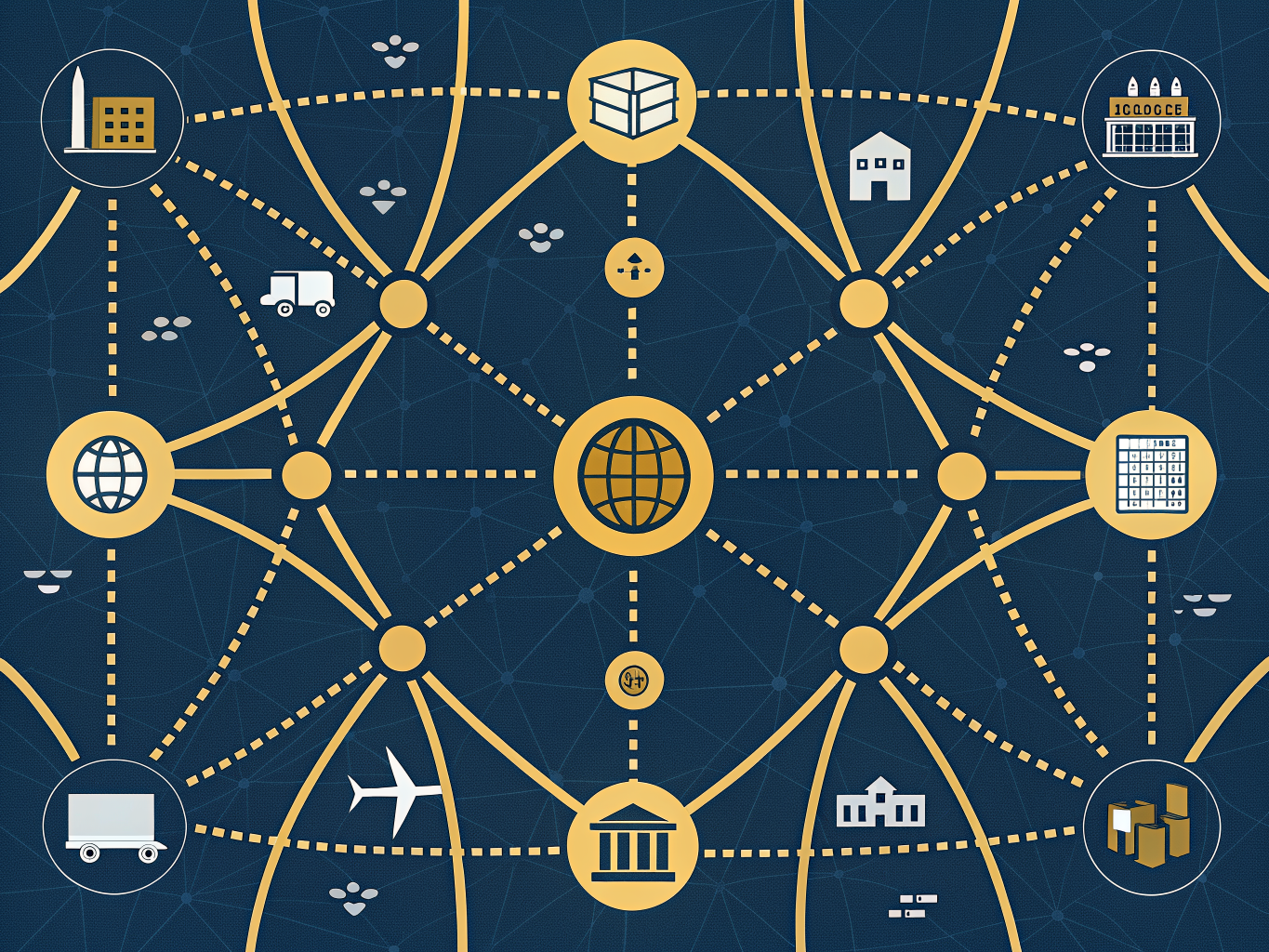
Real-time visibility enables proactive risk management. Weather delays at key ports, supplier disruptions, or transportation bottlenecks get flagged before they cascade through your network. 77% of logistics partners now invest in predictive analytics to boost profitability, recognizing that anticipation beats reaction every time.
The financial impact extends beyond operational efficiency. Optimized inventory levels free up working capital; predictive maintenance prevents equipment failures that halt production; smarter logistics routing reduces transportation spend. These aren't theoretical gains. Enterprises implementing end-to-end predictive analytics typically see cost reductions of 10-15% within the first year, with supply chain resilience improvements that prove invaluable during disruptions.
Frequently Asked Questions About Enterprise Data Analytics
How long does implementation actually take?
Most teams see meaningful results in 6 to 12 months, but only with clear goals, the right people, and genuine executive support. Quick wins can appear in weeks; transformational change takes longer. Expect the timeline to stretch if you're simultaneously cleaning data or restructuring teams.
What should we budget for this?
There's no one-size answer. A mid-market implementation might run $500K to $2M depending on complexity, data volume, and tool selection. The better question: what's the cost of not acting? Organizations delaying analytics investments lose competitive ground daily. ROI typically materializes within 18 months through improved decision speed, reduced operational waste, and better customer insights.
Do we need a data science team?
Not immediately. Start with solid data engineers and business analysts who understand your operations. As you mature, add specialized roles. Many companies over-hire upfront and under-utilize talent. Build gradually based on actual needs.
How do we handle data quality issues?
This isn't solved by technology alone. By 2024, 67% of enterprises will deploy data governance initiatives to comply with regulatory mandates and improve data quality. Establish ownership, document processes, and audit regularly. Bad data in means bad insights out.
Which platform should we choose?
Evaluate based on your specific use cases, not vendor hype. Consider integration capabilities, scalability, and total cost of ownership. The "best" tool is the one your team can actually use and maintain.
Key Takeaways: Your Enterprise Analytics Action Plan
Your enterprise analytics transformation doesn't require perfection; it requires momentum. Here's where to focus your energy:
Audit first, build second. Map your current data infrastructure and identify critical business gaps. You can't fix what you don't understand. This takes weeks, not months, and clarifies everything that follows.
Unify your data model. Fragmented data sources create fragmented insights. A unified foundation eliminates redundancy, improves speed, and makes scaling feasible. Organizations that embrace this approach alongside predictive analytics can navigate disruption with agility and unlock efficiencies.
Democratize access immediately. Your frontline employees see patterns executives miss. Data democratization gives employees at all levels access to insights, improving decision-making speed and accuracy. This isn't optional; it's competitive necessity.
Govern ruthlessly. Poor data quality compounds exponentially. Establish governance standards now, before scaling becomes impossible.
Measure what matters. Define KPIs tied directly to business outcomes: revenue impact, operational efficiency, customer retention. Vague metrics guarantee vague results.
Your next steps depend on your role:
IT leaders: Audit infrastructure this quarter; prioritize unified data architecture.
Business leaders: Identify your top three decision-making pain points; measure current decision velocity.
Supply chain managers: Map data silos affecting forecasting accuracy; pilot predictive models on highest-impact processes.
The competitive advantage belongs to enterprises moving now, not those planning endlessly. Your data is already valuable; you're just learning to see it.
Start Your Enterprise Analytics Transformation Today
The window for action is narrowing. Organizations that cling to fragmented data risk being outpaced by competitors wielding real-time insights with precision, and waiting another year means losing ground you may never recover. Yet here's the encouraging part: you don't need a perfect strategy to begin.
Start with a single pilot project. Pick a business challenge where better data visibility would immediately matter, whether that's inventory optimization, customer churn prediction, or operational efficiency. Pilot projects reduce risk, prove ROI quickly, and build internal momentum when stakeholders see results.
Three critical success factors matter most. First, secure genuine leadership commitment, not just budget approval. Second, invest in your people through training and hiring; tools are useless without skilled hands to operate them. Third, be realistic about timelines and resource needs.
The cost of inaction compounds daily. Every quarter without a data-driven edge means competitors gain ground, employees work with outdated information, and opportunities disappear unnoticed. Implementation costs pale against the expense of missed insights.
Begin this week. Assess where you stand today. Identify your highest-impact opportunity. Schedule conversations with stakeholders. The hardest part isn't the technology; it's deciding to move. That decision starts now.
Keep reading

Critical Third Parties: UK Cloud Rule Explained
A Critical Third Party is a provider whose service failure could threaten UK financial stability. The first UK designations are four cloud providers.

Netflix Earnings Put Always-On TV in Focus
Netflix reports Q2 results July 16 after reports it is weighing always-on channels. Arkolith maps NFLX to $284.0B in tracked 13F value.

UK Cloud Watchlist Maps to $4.45T in 13F Value
The UK's first cloud oversight list maps to Microsoft, Alphabet, Amazon and Oracle, which Arkolith tracks across $4.45T of Q1 2026 13F value.