Unified Data Platform: What You Need to Know in 2026
Last Updated: February 16, 2026
Key Takeaways
- A unified data platform consolidates data from multiple sources into one governed, accessible environment for seamless analytics
- Eliminates data silos, reduces manual work, and accelerates decision-making with real-time insights and AI capabilities
- Organizations using data-driven approaches are 23x more likely to acquire customers and 6x more likely to retain them
- Implementation requires clear business objectives, comprehensive data audits, and strategic alignment across departments
What Is a Unified Data Platform?
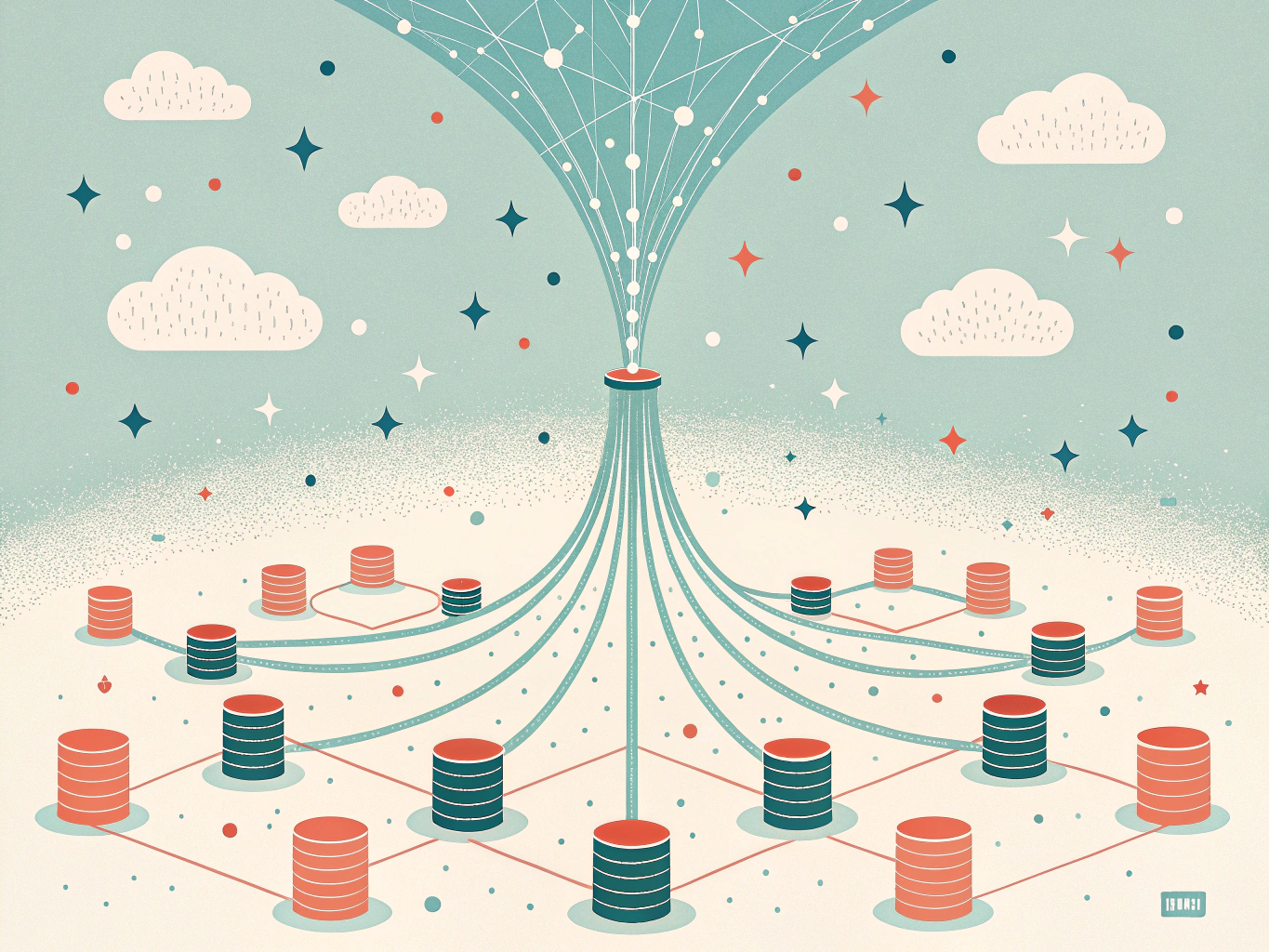
A unified data platform is a centralized system that consolidates data from hundreds of disparate sources, breaking down silos and creating a single, governed environment where information flows freely across your organization. It's the antidote to fragmentation.
Here's why this matters right now: most enterprises are drowning in trapped data. Critical insights sit locked in departmental databases, inaccessible to the teams who need them most. Marketing can't see what operations knows. Finance operates on yesterday's numbers. Decision-makers guess instead of knowing.
Nearly 80% of organizations operate across hybrid and multi-cloud environments, pulling from hundreds of disparate data sources. That complexity creates chaos. Your data lives everywhere except where you need it.
A unified data platform solves this by doing three things simultaneously: it ingests data from all your systems in real-time, governs it with consistent standards, and makes it instantly accessible for analytics, AI, and self-service exploration. No waiting for data engineers. No manual exports. No version confusion.
The difference from traditional siloed systems is fundamental. Legacy approaches treat data as a byproduct of individual applications. Unified platforms treat data as your most valuable business asset, worthy of central investment and governance.
The trapped data problem isn't just inconvenient, it's expensive. Every delayed insight costs you competitive ground. Every duplicated analytics effort wastes resources. Every decision made on incomplete information compounds the problem.
This isn't theoretical. Organizations with unified data platforms move faster, spot opportunities sooner, and respond to market shifts in weeks instead of months.
Why Data Silos Cost Organizations Millions
Picture this: your marketing team is running a campaign based on customer data from last month, while your sales team operates on real-time figures. Finance has different numbers entirely. Nobody's lying; the data just lives in separate systems that don't talk to each other. Meanwhile, someone's spending three hours manually reconciling spreadsheets instead of analyzing trends that could drive revenue.
This isn't hypothetical. The average organization loses $12.9M annually due to poor data quality, with revenue losses ranging from 15-25% across industries. The broader economic impact is staggering: poor data costs the US economy $3.1 trillion yearly. These aren't accounting errors or rounding mistakes; they're the compounding cost of fragmentation.
When data silos exist, your teams become data janitors. They spend precious time hunting down information across disconnected platforms, validating conflicting reports, and manually stitching together a coherent picture. That's time not spent on strategy, innovation, or customer insights. The frustration is real: analysts report spending up to 80% of their time preparing data rather than analyzing it.
The competitive gap is widening. Companies that make data-driven decisions are 23 times more likely to acquire customers and six times more likely to retain them. Your competitors aren't waiting for perfect systems; they're moving faster with unified platforms that give them immediate clarity.
The cost of inaction compounds daily. Every quarter you operate with fragmented data, you're leaving money on the table, slowing innovation cycles, and increasing compliance risk. The question isn't whether you can afford a unified data platform. It's whether you can afford to wait.
Core Components of a Unified Data Platform
A unified data platform works like a well-orchestrated system with five critical moving parts, each handling a specific job in your data pipeline.
Data Integration and Ingestion is your collection mechanism. It pulls information from everywhere your business operates: your CRM, ERP system, IoT sensors on the factory floor, application logs, and databases scattered across departments. The key here is flexibility. You need to ingest data in real-time when speed matters (like fraud detection) and in batch mode when volume is the priority. This component eliminates the manual data shuffling that wastes weeks and introduces errors.
Centralized Storage gives you a single repository where all that incoming data lives together. Whether you're storing structured tables or unstructured images and documents, this layer scales without forcing you to choose between different systems. It's the foundation everything else rests on.
Data Processing and Transformation is where raw data becomes useful. ETL pipelines clean messy records, normalize inconsistent formats, and prepare information for analysis. A customer's phone number recorded five different ways becomes standardized. Duplicate entries get flagged. Missing values get handled intelligently.
Analytics and Visualization turns processed data into decisions. Dashboards show supply chain bottlenecks in real-time. Reports reveal compliance gaps before auditors do. Your team sees patterns that matter, not just numbers on a spreadsheet.
Governance and Security protects everything. Role-based access ensures only authorized people see sensitive information. Data lineage tracking shows exactly where every number came from. Audit trails document who accessed what and when, critical for regulatory requirements and internal accountability.
These five components work together in a continuous cycle. When any piece fails or remains disconnected, you're back to fragmented data and slow decisions. Build them all, and you've got a system that actually delivers business impact.

Key Benefits You Can Expect
A unified data platform fundamentally changes what your organization can accomplish. Here's what becomes possible.
Speed wins markets. When supply chain managers can access real-time inventory data across all warehouses simultaneously, they respond to disruptions in hours instead of days. Energy companies spot demand fluctuations and adjust grid operations instantly. Security agencies detect threats faster because data flows continuously rather than sitting in isolated systems waiting for manual integration.
Your budget breathes easier. You eliminate the expensive, repetitive work of manually connecting systems. Unified data platforms streamline data management processes, reducing time and effort required to gather, prepare, and analyze data. Infrastructure costs drop when you consolidate redundant tools and databases. One organization we've seen cut their annual data infrastructure spending by 40% within eighteen months.
One version of truth ends politics. When finance, operations, and marketing all reference the same customer data, reconciliation delays vanish. No more arguments about which number is correct. Decisions move forward confidently.
Your team stops waiting on IT. Self-service tools let business users explore pre-prepared datasets independently, without submitting requests and waiting weeks for analysis. Analysts focus on strategic work instead of fielding routine data requests.
AI actually works. Machine learning models train on comprehensive, clean datasets rather than fragmented information. Better data means better predictions, whether you're forecasting demand, detecting fraud, or optimizing operations.
Compliance becomes manageable. Centralized governance makes meeting GDPR, CCPA, and industry-specific regulations straightforward. Audit trails are built in. You know exactly where sensitive data lives and who accesses it.
These benefits don't require years to materialize. Organizations implementing unified platforms report measurable improvements within the first quarter. The question isn't whether you can afford a unified platform. It's whether you can afford to keep operating without one.
Real-World Applications Across Industries
A logistics company tracking 50,000 shipments across 12 countries faces a brutal reality: inventory data lives in one system, supplier performance in another, equipment sensors in a third. When a container gets delayed, managers piece together information manually. A unified data platform changes this entirely. Real-time visibility across suppliers, routes, and assets means predictive maintenance flags a failing refrigeration unit before it spoils cargo. Demand forecasts integrate with supplier lead times, cutting excess inventory by 20-30%.

Smart cities demonstrate the platform's urban impact. Smart city data analytics can help city managers reduce traffic congestion, shorten commute times, enhance public safety, and improve emergency response. Traffic sensors, parking meters, and emergency dispatch systems feed one unified view. A accident blocks a major intersection; the system reroutes buses and alerts nearby hospitals simultaneously, not sequentially.
Energy utilities face critical infrastructure demands. Real-time grid monitoring combined with weather forecasts and consumption patterns prevents blackouts before they happen. Predictive maintenance on transformers and transmission lines shifts utilities from reactive repairs to strategic planning. The financial sector consolidates customer data across branches, products, and touchpoints for 360-degree compliance views. Fraud detection algorithms spot suspicious patterns instantly. Risk assessment becomes dynamic, not quarterly.
National security and government agencies integrate intelligence from multiple sources, satellites, human assets, and open data. Threat detection improves when siloed information connects. Emergency response coordination accelerates when all agencies access the same operational picture.
The common thread: fragmentation kills speed. Decision-makers waste time hunting data instead of acting on it. A unified data platform collapses that gap, turning information into immediate advantage.
How to Implement a Unified Data Platform
Implementing a unified data platform is a marathon, not a sprint. But with a structured approach, it's entirely achievable.
Start by clarifying what you actually need. Successful implementation requires defining what you hope to achieve and identifying which business decisions would benefit from improved data access. Don't aim to solve everything at once; pick two or three high-impact decisions that currently suffer from fragmented data.
Next, audit your current state honestly. Map every data source, assess quality issues, and document existing pipelines. This unglamorous step prevents costly mistakes later. You'll likely discover redundant systems, siloed teams, and quality problems that nobody knew about.
Then design your architecture. This isn't just technical; it must align with your business priorities and regulatory requirements. Work cross-functionally here. Your finance team's needs differ from marketing's, and that matters.
Data governance often gets postponed until problems emerge. Don't do that. Establish clear ownership, quality standards, and access controls before migration begins. It's harder to retrofit governance than to build it in.
The human element makes or breaks implementations. New technologies require training, executive sponsorship, and stakeholder communication. Your best engineers can't succeed if teams don't understand how to use the platform or why it matters to them.
Finally, measure what matters. Track decision velocity (how quickly insights drive action), cost savings from eliminated redundancy, and data quality improvements. These metrics prove ROI and sustain momentum through the inevitable rough patches.
This journey typically takes 12 to 18 months. That feels long until you experience the clarity that unified data brings to your organization.
Common Challenges and How to Overcome Them
Q: What's the actual ROI on implementing a unified data platform?
You'll see measurable returns quickly. Teams spend less time hunting data across systems, analysts get answers in hours instead of days, and executives make decisions based on current information rather than gut feeling. Most organizations report 20-40% reduction in manual data work within the first six months, which translates directly to cost savings and faster time-to-insight.
Q: How do we handle data quality when migrating everything?
Start with a solid data governance framework before you migrate anything. Define what "clean" looks like for your business, run cleansing processes on source data, and implement quality monitoring tools. Don't try to fix everything at once; prioritize your most critical datasets first. Data governance frameworks and access controls help define policies and monitor usage throughout the process.
Q: Will this integrate with our existing systems?
Modern platforms use APIs and microservices specifically designed to work alongside legacy systems and cloud tools. You're not ripping and replacing; you're connecting. Your current infrastructure stays intact while the platform pulls data from multiple sources seamlessly.
Q: How do we get teams on board?
Resistance is normal. Combat it with clear communication from leadership, early wins that show immediate value, and hands-on training. Start with one department, prove success, then expand. People support what they understand and see working.
Q: What about security and compliance?
Unified platforms include role-based access controls, encryption, audit trails, and built-in compliance tools to handle regulatory requirements. Security isn't an afterthought; it's foundational.
Q: How do we pick the right vendor?
Evaluate based on your specific use cases, compatibility with your tech stack, scalability for future growth, and total cost of ownership. Don't chase features you don't need.
The Bottom Line
The reality is stark: unified data platforms are no longer a competitive advantage; they're essential infrastructure for any enterprise operating at scale. The cost of fragmentation—missed opportunities, delayed decisions, regulatory exposure, customer churn—far exceeds the investment required to consolidate your data foundation.
Organizations that treat this as a "nice-to-have" project are falling behind. Market leaders in supply chain management, energy, security, and financial services are already consolidating their data infrastructure, gaining months or years of competitive advantage through faster decision-making and deeper customer intelligence.
Your path forward requires three non-negotiable elements: first, clear executive alignment on why this matters to your business strategy, not just IT operations; second, honest assessment of your current state and realistic change management across teams; third, selection of the right technology partner who understands your industry's specific constraints and complexity.
For supply chain managers, this means end-to-end visibility and resilience. For security agencies, it's actionable intelligence at speed. For energy companies, it's optimized operations and regulatory compliance. The specifics vary, but the imperative remains identical.
The window to move is now. Your competitors aren't waiting. The organizations that act decisively in the next 12 to 18 months will establish data advantages that take years for others to replicate.
Start with an honest assessment of your current data architecture. Identify your highest-impact use case. Build the business case. Then move. Speed matters more than perfection.
Keep reading

Critical Third Parties: UK Cloud Rule Explained
A Critical Third Party is a provider whose service failure could threaten UK financial stability. The first UK designations are four cloud providers.

Netflix Earnings Put Always-On TV in Focus
Netflix reports Q2 results July 16 after reports it is weighing always-on channels. Arkolith maps NFLX to $284.0B in tracked 13F value.

UK Cloud Watchlist Maps to $4.45T in 13F Value
The UK's first cloud oversight list maps to Microsoft, Alphabet, Amazon and Oracle, which Arkolith tracks across $4.45T of Q1 2026 13F value.