Situational Awareness Bets $400M on ASML Challenger
Situational Awareness has put $500 million into Source Foundry, including $400 million this week, according to reports.
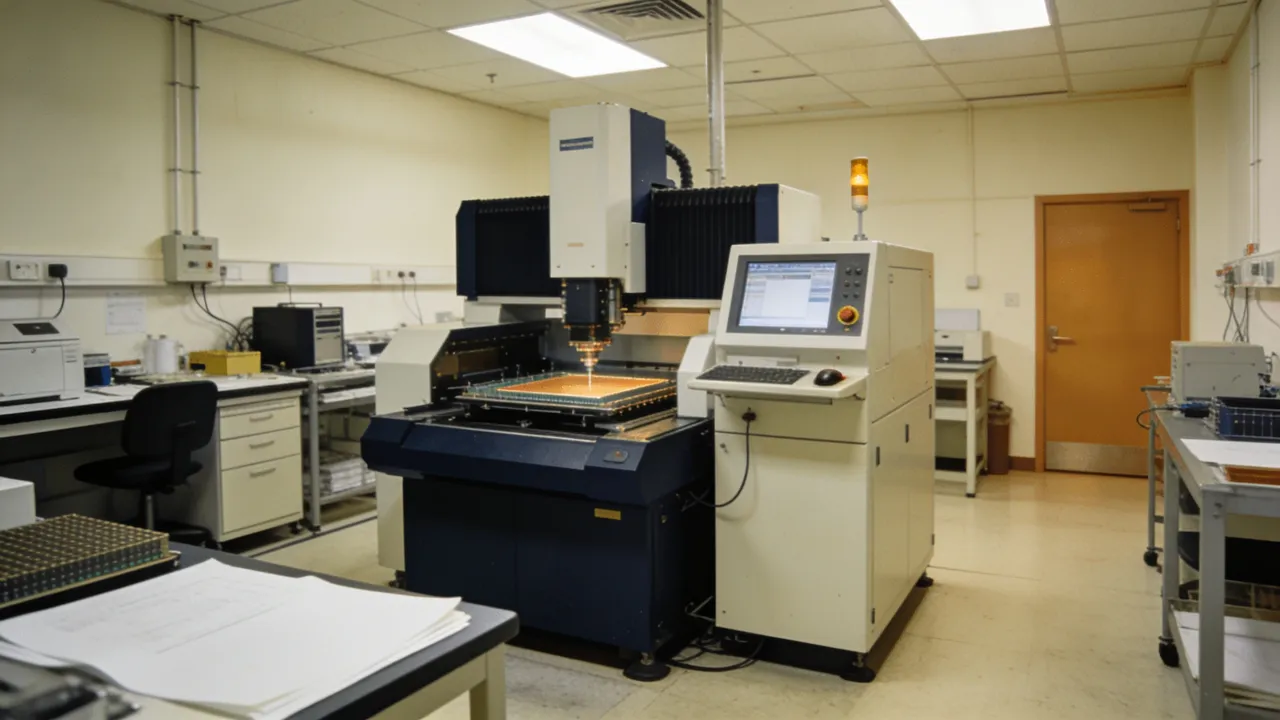
Situational Awareness has invested $500 million in Source Foundry, including a new $400 million infusion this week, the Wall Street Journal reported. The startup is trying to build chip-manufacturing equipment that could challenge ASML's grip on the tools used to make the most advanced AI chips.
The investment matters because it puts one of the most watched AI funds behind a hardware bottleneck, not another model company. The open question is whether a private startup can shorten a manufacturing-tool race that incumbents and governments have spent decades and billions trying to solve.
What was reported
The AIWeekly Source Foundry alert, citing the Wall Street Journal, said Source Foundry was founded in 2025 by Stanford researchers Abdulmalik Obaid and Joe Burg, and that the new investment brings Situational Awareness's total backing to about $500 million.
The Daily Hodl Source Foundry report repeated the same broad figure and described the target as equipment for advanced semiconductor manufacturing. Earlier reporting on the fund's July stress made the same question visible: how much private-hardware risk can an AI fund carry after a public-market drawdown?
That sourcing makes the verified claim narrow. The public record supports a reported private-market commitment and the broad target of semiconductor-manufacturing tools. It does not prove Source Foundry has a production-ready machine, named customers, disclosed revenue or a timetable for competing with ASML in high-volume manufacturing.
Why ASML is the hard target
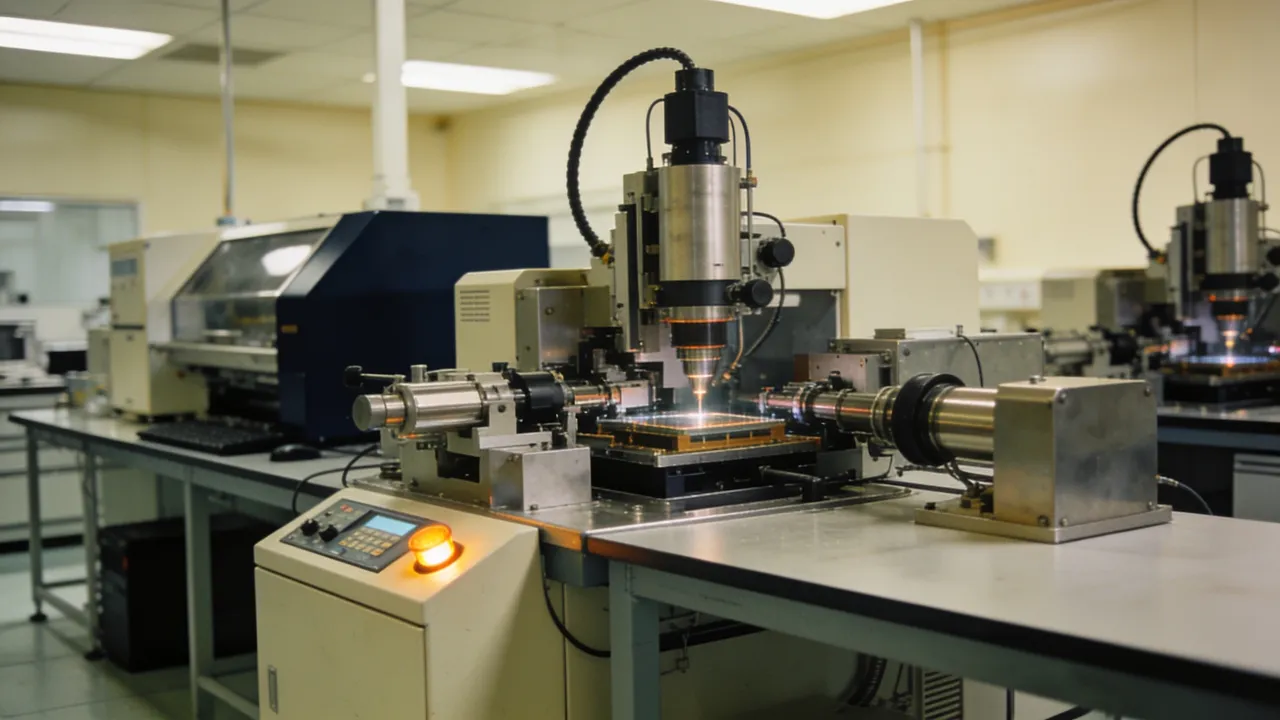
ASML describes its ASML EUV lithography systems as the tools chipmakers use to print the highly complex foundation layers of 7 nm, 5 nm and 3 nm nodes. In its ASML Q2 2026 financial results, ASML guided 2026 net sales to between EUR43 billion and EUR45 billion.
That is the scale of the bottleneck Source Foundry is reportedly trying to attack. EUV lithography is not a normal software moat. It is precision hardware, optics, process control, supply chains and customer qualification tied together.
The investment therefore says as much about Situational Awareness's risk appetite as it says about Source Foundry. A $400 million follow-on commitment is large enough to matter even in a capital-intensive chip-equipment market, but it is still tiny compared with the installed industrial base it wants to pressure. That is why the setup belongs beside earlier AI-infrastructure supply questions such as ASML capacity and Nvidia compute commitments, not only in a private-fund recap.
What to watch next
The next useful evidence is not another valuation headline. It is whether Source Foundry discloses a product architecture, a process node target, a pilot customer, a supplier partnership or a manufacturing timetable.
There is also a portfolio question. Situational Awareness is reportedly committing more private capital after a turbulent period in public AI stocks. If the Source Foundry bet works, the fund owns a piece of the AI supply chain bottleneck. If it does not, the story becomes a test of how much private-hardware risk an AI hedge fund can carry after a public-market drawdown.
For now, the sourced fact is simpler: Situational Awareness reportedly backed Source Foundry with $500 million in total, including $400 million this week, and the startup is aiming at one of the hardest physical constraints in the AI economy.
This article is informational only and is not investment, legal, tax or accounting advice.
More from Arkolith
Nvidia Backs OpenAI Ohio Campus With SB Energy Deal
Nvidia will invest $1.5 billion in SB Energy and provide credit support for OpenAI capacity at the PORTS-Pike campus.
Stripe's OpenRouter Deal Puts AI Routing on Fintech's Rails
Bloomberg-syndicated reports say Stripe has agreed to buy OpenRouter for more than $7 billion, turning model routing into payments-scale infrastructure.
Sony and TSMC's Kumamoto Sensor JV Gets a $6.3B Test
Reuters, citing Nikkei, reported that Sony and TSMC plan about ¥1 trillion of spending for a Kumamoto image-sensor venture still awaiting binding terms.