SpaceX Puts Nvidia's Rubin Chips Into Orbit
SpaceX said its Starmind AI1 satellites will use Nvidia Rubin GPUs and Vera CPUs, turning the company’s AI buildout into an orbital-compute test.
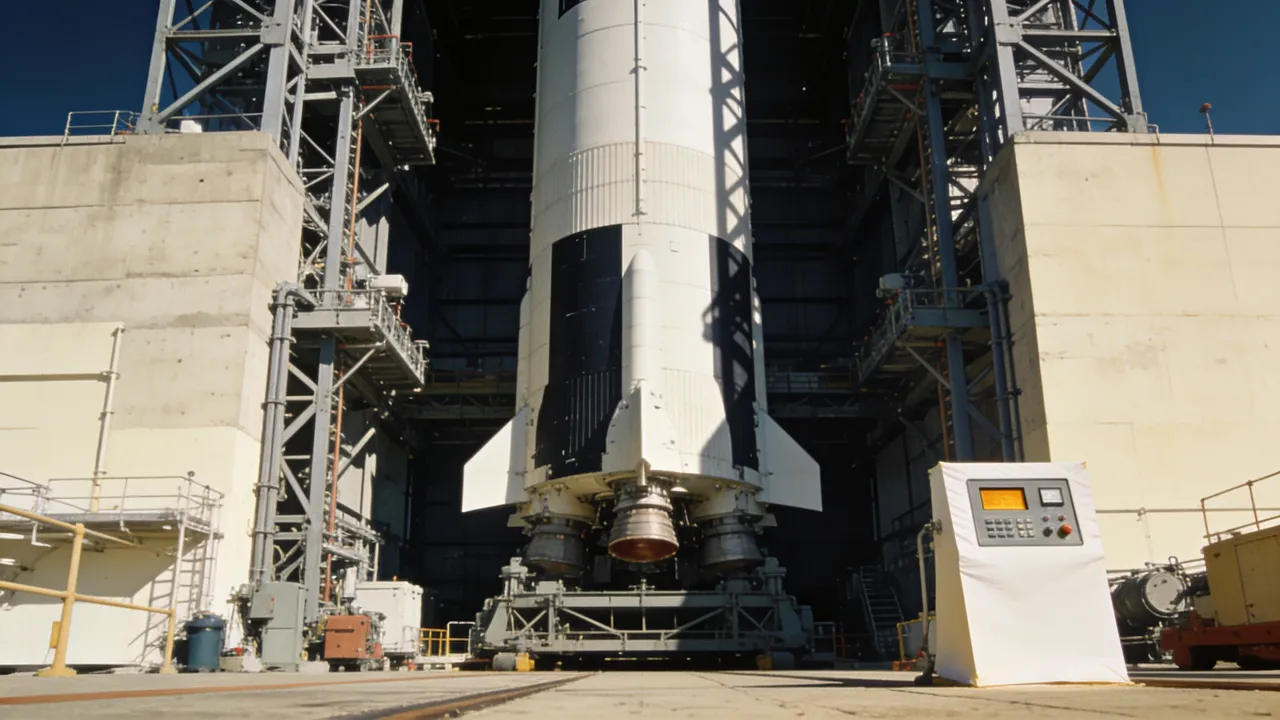
SpaceX said on August 4 that it is partnering with Nvidia to design the Starmind AI1 satellite compute payload. Each Starmind satellite will include Nvidia Rubin GPUs and Vera CPUs for data-center-class space compute, according to the company's announcement.
The market question is no longer only how much AI infrastructure sits on land. SpaceX is now tying its satellite roadmap, AI capacity plan and Nvidia supply choice into one claim: some data-center work can move into orbit.
What SpaceX announced
In an official SpaceX Starmind announcement, SpaceX said Starmind AI1 will be built with Nvidia and will carry Rubin GPUs and Vera CPUs. The company linked the announcement to a SpaceX Starmind page on its site.
Elon Musk separately made a Musk Nvidia-exclusivity statement. That statement matters because it turns the Starmind announcement from a satellite experiment into a supplier-concentration signal.
Why the chip choice matters
Rubin and Vera are Nvidia's next-generation AI compute architecture, so the announcement pushes SpaceX's AI-infrastructure story beyond launch capacity and Starlink distribution. The company is saying the compute payload itself is part of the product.
The timing also makes the claim harder to ignore. Investor's Business Daily SpaceX earnings coverage reported that SpaceX's first public quarterly report showed $7.8 billion of revenue, up 92% year over year, while the stock fell after hours as investors weighed AI spending and a coming lockup expiration.
The Starmind announcement also extends a pattern already visible in AI infrastructure coverage: compute access is becoming part of the strategy, not only a cost line. That connects it to Nvidia's earlier Vera Rubin compute deals and SpaceX's post-IPO earnings clock.
What remains unproven
The official announcement does not prove that orbital AI compute is economically better than terrestrial data centers. It also does not give launch timing, satellite count, power budget, cooling design, unit economics or customer commitments for Starmind.
That boundary is important. A partnership and payload architecture are facts. A functioning orbital data-center business is still a future proof point.
What to watch next
The next useful evidence is whether SpaceX gives Starmind a launch schedule, discloses capacity per satellite, or shows a customer workload running on the orbital payload.
Until then, the sourced event is narrower and still material: SpaceX has named Nvidia Rubin GPUs and Vera CPUs as the compute stack for Starmind AI1, and Musk has said the company's GPU roadmap is now exclusive to Nvidia.
This article is informational only and is not investment, legal, tax or accounting advice.
More from Arkolith
Nvidia Backs OpenAI Ohio Campus With SB Energy Deal
Nvidia will invest $1.5 billion in SB Energy and provide credit support for OpenAI capacity at the PORTS-Pike campus.
Stripe's OpenRouter Deal Puts AI Routing on Fintech's Rails
Bloomberg-syndicated reports say Stripe has agreed to buy OpenRouter for more than $7 billion, turning model routing into payments-scale infrastructure.
Data Centers Become the June Construction Bright Spot
Census reported a weaker June construction tape, while ABC analysis said data-center construction rose 7% in the month and 46% from a year earlier.