Prologis Makes 5.8 GW the Data Center Number to Watch
Prologis raised 2026 guidance after record leasing and said its data-center power pipeline reached 5.8 GW.
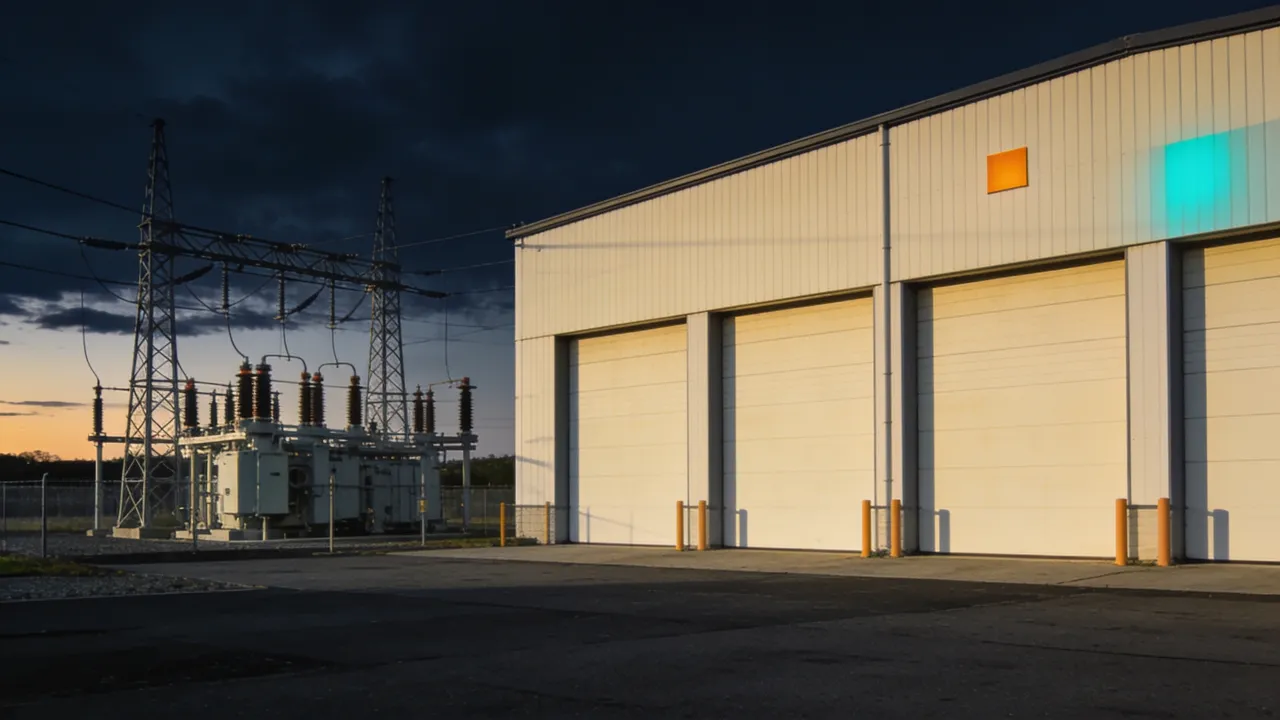
Prologis raised its 2026 guidance on July 16 after record second-quarter leasing and said its data-center power pipeline had expanded to 5.8 gigawatts. The number gives investors a concrete way to judge whether the warehouse landlord is becoming an AI-infrastructure company, or whether data centers remain a promising side channel inside a much larger logistics real-estate business.
The earnings beat was not the only event. Prologis also lifted its expected 2026 development starts by $1 billion at the midpoint, with data centers included in that capital-deployment line. That makes power access, pre-leasing and execution risk the next questions to watch.
What Prologis reported
In its second-quarter results, Prologis said net earnings per diluted share rose to $1.13 from $0.61 a year earlier. Core funds from operations, a REIT cash-flow measure, rose to $1.63 per diluted share from $1.46.
The company also said it signed more than 67 million square feet of leases, a record level, and ended the period with owned and managed occupancy of 95.5%. Same-store net operating income grew 6.4% on a net effective basis and 8.5% on a cash basis.
Management raised 2026 net-earnings guidance to $4.40 to $4.55 per diluted share, up from $3.80 to $4.05. It also raised core FFO guidance to $6.22 to $6.30, from $6.07 to $6.23.
Why the data-center line matters
The most important infrastructure sentence was not in the income statement. Prologis said it expanded its data-center power pipeline to 5.8 GW. It also started $1.6 billion of development across logistics and data centers during the quarter.
That does not mean 5.8 GW is built, contracted, powered or earning rent. A pipeline is potential capacity. The useful read is narrower: Prologis is now asking investors to value power access and digital-infrastructure conversion as part of the same platform that leases warehouses.
The same power constraint sits behind other AI-infrastructure stories, including Micron's U.S. chip-fab investment. The common thread is not only demand for compute. It is whether land, power, capital and permitting can arrive at the same time.
The guidance table supports that shift. Prologis raised expected 2026 development starts to $4.5 billion to $5.5 billion from $3.5 billion to $4.5 billion, and notes that the capital-deployment category is inclusive of data centers.
The balance-sheet test
Data centers can absorb more capital and carry different execution risk than ordinary logistics space. Prologis reported about $7.6 billion of available liquidity at quarter-end, debt-to-adjusted EBITDA of 4.7 times, and debt equal to 23.9% of total market capitalization.
Those figures matter because a power-led data-center strategy does not only require land. It requires grid access, equipment, customers, capital timing and construction discipline. The company says its scale and customer relationships position it for the next cycle, but the risk factors in the same release include data-center development and power-procurement risks.
What comes next
The Q2 earnings-call replay is available through July 30, with the supplemental financial report posted through investor relations. The next useful checks are whether data-center starts become signed, funded projects, whether the 5.8 GW pipeline grows or converts, and whether core warehouse leasing remains strong while capital shifts toward power-heavy opportunities.
For now, the story is a threshold rather than a finished transformation. Prologis still reported a record leasing quarter in its core business. But the market now has a sharper number to track: 5.8 GW of possible data-center power behind a logistics landlord that just raised guidance again.
This article is informational only and is not investment advice.
More from Arkolith
Meta's $279B AI Leases Test the Balance Sheet
Meta disclosed $278.99 billion of future lease obligations and $349.31 billion of commitments, moving the AI buildout beyond capex guidance.
Carrier and Corning Split the AI Supply Trade
Carrier raised its data-center outlook as Corning sold off on guidance, turning AI infrastructure earnings into a supplier-quality test.
How to Track AI Data Center Stocks With 13F
Use 13F filings to track disclosed institutional exposure to AI data center stocks without treating quarterly holdings as live trading signals.